

Brake Drums for Heavy Trucks - Long-Life, OEM Quality
Brake Drum Manufacturing, Specs, and Real-World Use: Field Notes from the Shop Floor
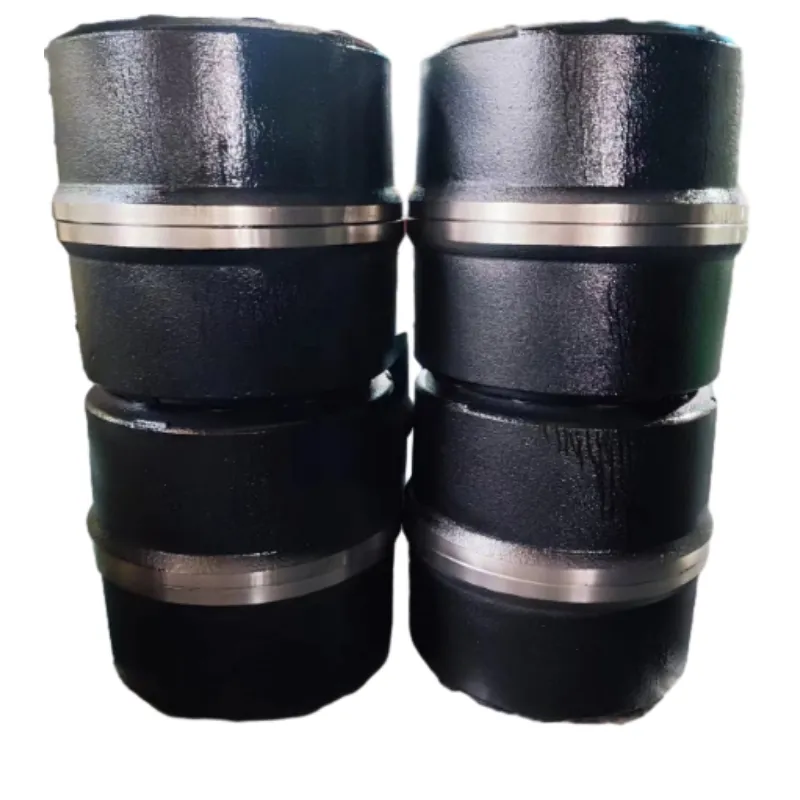
If you work around fleets or heavy-duty rigs long enough, you learn to respect the humble drum. The Brake Drums we’re discussing today come out of Haozhuang, Tangqiu Town, Ningjin County, Xingtai, Hebei, China—an old-school casting hub that, frankly, knows iron. Made from delicate (yet durable) gray cast iron, this drum may look like a hand drum, but it carries a ton of responsibility: stopping mass, repeatedly, without complaint.
Industry trends (and what buyers actually ask)
Right now, fleets want predictable wear, quieter braking, and fewer roadside surprises. Many customers say they’d trade a few ounces of weight for better thermal stability. It seems that smart money is moving toward tighter machining tolerances, verified metallurgy (SAE J431 G3000), and full traceability. Also, to be honest, post-COVID logistics made lead time and MOQ just as critical as price.
Technical specification (snapshot)
| Material | Gray Cast Iron, SAE J431 G3000 / ASTM A48 ≈ Class 35 |
| Hardness | HB 180–220 (real-world use may vary) |
| Max Dia (wear limit) | Stamped per model; typical +1.5 mm over nominal |
| Runout | ≤ 0.10 mm after finish machining |
| Dynamic balance | ISO 1940-1, G16 ≈ typical for commercial drums |
| Surface roughness | Ra 3.2–6.3 μm on friction surface |
| Service life | ≈ 80,000–150,000 km depending on duty cycle |
Process flow (why these Brake Drums feel consistent)
Raw charge selection (pig iron + low-phosphorus scrap) → induction melting → inoculation for graphite control → sand casting (core integrity matters) → stress relief → CNC turning/boring → drilling → dynamic balancing → friction surface finish → crack/microstructure inspection → runout check → phosphate or paint → packaging. Testing references: GB/T 9439 for gray iron; hardness sampling per heat; dynamometer fade checks against FMVSS 121/ECE R13 targets.
Application scenarios
Heavy trucks, city buses, construction haulers, agriculture trailers, and older light-commercial platforms that still spec Brake Drums. Also used in off-highway gear where sealed, robust hardware beats delicate discs in grit.
Advantages we’ve seen in the field
- Thermal mass that resists fade under repeated stops.
- Forgiving to dust, mud, and minor contamination.
- Stable friction surface; shoes bed-in predictably.
- Serviceable in remote depots with basic tools—surprisingly handy.
Vendor comparison (quick buyer’s grid)
| Vendor | Casting Grade | Tolerance | Lead Time | Certs |
|---|---|---|---|---|
| Ningchai (Hebei) | SAE J431 G3000 | Runout ≤0.10 mm | ≈ 25–35 days | IATF 16949, ISO 9001 |
| Domestic Foundry X | ASTM A48 Class 30–35 | Runout ≤0.15 mm | ≈ 30–45 days | ISO 9001 |
| Imported Brand Y | SAE J431 G3000 | Runout ≤0.08 mm | ≈ 45–60 days | IATF 16949 |
Customization options
Bolt patterns, hub pilots, offset widths, private-label casting marks, anticorrosion coatings, and packaging to fleet ID. For special duty, some fleets request higher hardness windows—though, actually, shoe wear can spike, so test first.
Case study (fleet feedback)
A Hebei city-bus operator moved to these Brake Drums on the rear axles. Over 12 months: average drum life ≈ 118,000 km; shoe life up 9%; complaints of squeal down noticeably. Dyno checks met FMVSS 121 stopping distances with margin. Not perfect (one batch needed re-balance), but support was quick.
Compliance, testing, and paperwork
Typical files include material certs, hardness maps, balance reports (ISO 1940-1), and PPAP packs for automotive clients. For international tenders, buyers often ask for IATF 16949 and ISO 9001 coverage up front.
Authoritative citations
- SAE J431: Automotive Gray Iron Castings (G3000 grade).
- FMVSS 121: Air Brake Systems – Performance requirements.
- ECE R13: Braking of Category M, N, O vehicles.
- ISO 1940-1: Mechanical vibration – Balance quality requirements.
- GB/T 9439: Gray Iron Castings – Technical conditions.
-
Understanding Drum Brakes on Cars A Complete Guide to ReliabilityNewsApr.16,2026
-
Understanding Drum Brakes on Car for Safety and PerformanceNewsApr.09,2026
-
Comprehensive Guide to Understanding Drum Brakes on a Semi TruckNewsApr.07,2026
-
Understanding the Mechanics and Maintenance of Drum Brakes on a CarNewsApr.04,2026
-
Understanding and Fixing Drum Brakes Not Self Adjusting for Vehicle SafetyNewsMar.31,2026
-
Understanding and Fixing Issues with Drum Brakes Not Releasing EffectivelyNewsMar.28,2026
-
Nissan Sentra Drum Brakes A Comprehensive Guide to Maintenance and ReplacementNewsMar.26,2026