

Brake Drums for Trucks: OEM Quality, Durable, Fast Shipping?
Brake Drum Market Notes: What’s Changing, What Still Matters
Let’s talk about brake drums. They never really left the stage, but they’ve certainly learned a few new tricks. In trucks, buses, trailers—and yes, still in plenty of passenger platforms—drums remain a dependable workhorse. Actually, the story is more interesting than that. Between better metallurgy, tighter machining, and smarter quality systems, the modern drum is a different animal than the ones some of us grew up wrenching on.
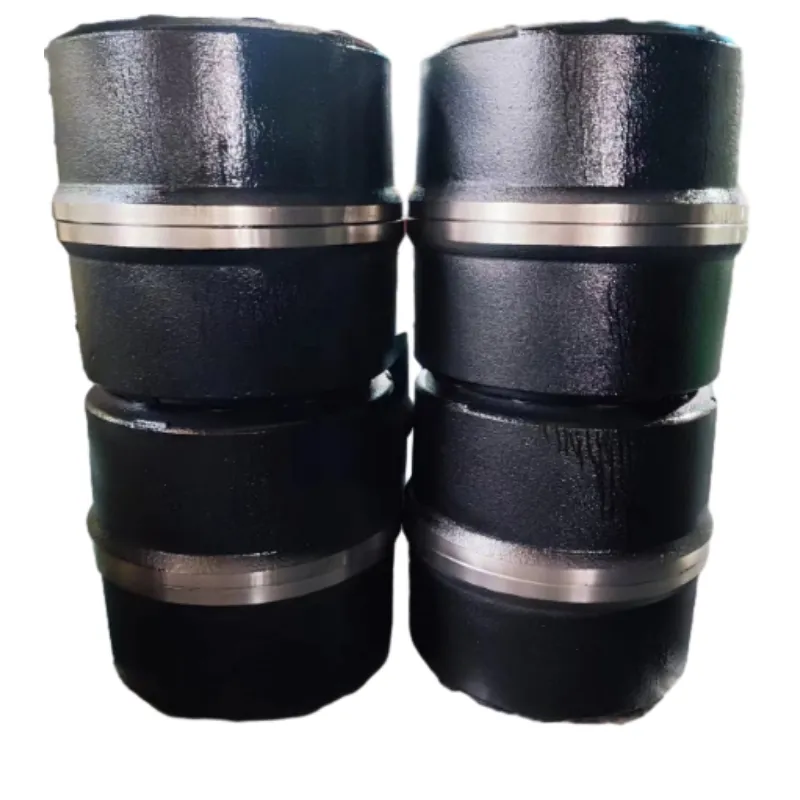
The product I spent time with recently was a gray cast iron Brake Drum from Haozhuang, Tangqiu Town, Ningjin County, Xingtai, Hebei Province, China. It resembles a hand drum (classic profile), but what matters is inside: carefully controlled graphite structure, stable thermal behavior, and consistent wall thickness. Many customers say they notice steadier pedal feel after 15–20k km of use—which, to be honest, is when cheaper units start to wobble or sing.
How It’s Made: Materials, Methods, and Tests
Material: gray cast iron (per SAE J431, Class G3000 or similar), tuned for damping and thermal crack resistance. Melting and inoculation get more attention now—foundries monitor chill depth and graphite morphology, which sounds nerdy but frankly determines whether your drum warps under repeated hill descents.
Process flow (simplified): pattern and core making → controlled melting and inoculation → casting (green sand, sometimes resin sand for precision) → heat treatment (stress relief) → CNC machining (ID brake surface, pilot, bolt circle) → dynamic balancing → shot blasting → coating of non-friction surfaces → 100% inspection on critical dimensions.
Testing and standards: runout check (≤0.05 mm typical), hardness mapping (HB 180–230), ultrasonic flaw detection, dynamic balance (≈≤30 g·cm), burst test (per vendor protocol), and application conformance to ECE R13 for braking performance in vehicles and FMVSS 121 for air-braked systems. Quality systems usually reference IATF 16949, and material verification aligns with SAE J431.
Representative Product Specs (real-world use may vary)
| Outer Diameter | ≈ 280–420 mm (heavy-duty ranges beyond 450 mm) |
| Friction Surface ID | ≈ 254–410 mm, per model |
| Runout (as shipped) | ≤ 0.05 mm |
| Hardness | HB 180–230 (typical) |
| Balance | ≤ 30 g·cm (around) |
| Service Life | ≈ 150,000–300,000 km depending on axle load, duty cycle, lining |
Application Scenarios and Advantages
- Heavy trucks, city buses, coaches, semi-trailers, some compact cars, off-highway equipment.
- Advantages: superior noise damping, lower total cost of ownership, robust against contamination. In fact, fleets like the simplicity—no caliper complexity, fewer moving parts.
- Common feedback: “Less fade on mountain routes than our previous batch,” and “drum wear is predictable.”
Vendor Snapshot: What Buyers Compare
| Vendor | Casting Method | Balance Spec | Lead Time | MOQ | Certifications | After-Sales |
|---|---|---|---|---|---|---|
| Ningjin (Hebei) Source | Green/resin sand, stress relief | ≤ 30 g·cm | ≈ 20–35 days | Around 50–100 pcs | ISO 9001, IATF 16949 | Runout warranty, traceability |
| Regional Trader A | Mixed outsource | ≤ 40 g·cm | ≈ 30–45 days | 100+ pcs | ISO 9001 | Basic replacement |
| OEM-Tier Foundry B | Automated line | ≤ 25 g·cm | ≈ 45–60 days | 500+ pcs | IATF 16949, PPAP | Extended PPAP support |
Customization and Fitment
Options include pilot diameter, bolt circle/PCD, stud hole count, width, and balance class. Coatings (phosphate, e-coat) for non-friction surfaces are increasingly popular in coastal fleets. For fleets swapping to brake drums with improved heat capacity, validate shoe-lining compatibility (SAE J661 data helps) and confirm hub interface tolerances.
Real-World Cases
- Coach operator (mountain routes): reported ≈18% reduction in fade events after standardizing on tighter-balance brake drums.
- Mining haul trucks: switching to thicker-wall drums cut cracking complaints to near zero over 12 months (harsh dust, high heat).
- Urban delivery fleet: longer lining life by ≈10–12% thanks to smoother drum surfaces and consistent hardness.
Final thought: discs get the headlines, but a well-cast, well-machined set of brake drums can be boringly reliable—and that’s exactly what you want when tonnage and gravity start negotiating.
Authoritative References
- SAE J431: Automotive Gray Iron Castings (material classes for drums).
- ECE R13: Braking of Category M, N, O vehicles (system performance).
- FMVSS 121: Air Brake Systems (heavy vehicle braking requirements).
- IATF 16949: Automotive Quality Management System for production parts.
-
Understanding Drum Brakes on Cars A Complete Guide to ReliabilityNewsApr.16,2026
-
Understanding Drum Brakes on Car for Safety and PerformanceNewsApr.09,2026
-
Comprehensive Guide to Understanding Drum Brakes on a Semi TruckNewsApr.07,2026
-
Understanding the Mechanics and Maintenance of Drum Brakes on a CarNewsApr.04,2026
-
Understanding and Fixing Drum Brakes Not Self Adjusting for Vehicle SafetyNewsMar.31,2026
-
Understanding and Fixing Issues with Drum Brakes Not Releasing EffectivelyNewsMar.28,2026
-
Nissan Sentra Drum Brakes A Comprehensive Guide to Maintenance and ReplacementNewsMar.26,2026