

Brake Drums for Trucks: OEM Quality, Factory Direct?
Brake Drum Buyer’s Field Notes from the Shop Floor
If you spend your days obsessing over stopping distances and uptime (same here), you eventually end up talking about brake drums. Made from gray cast iron, shaped like—well—a drum, they’re the unsung heroes behind predictable, fade-resistant braking in trucks, buses, trailers, and heavy equipment. Origin matters too: this model is cast and machined in Haozhuang, Tangqiu Town, Ningjin County, Xingtai, Hebei Province, China. Solid industrial cluster, in my experience.
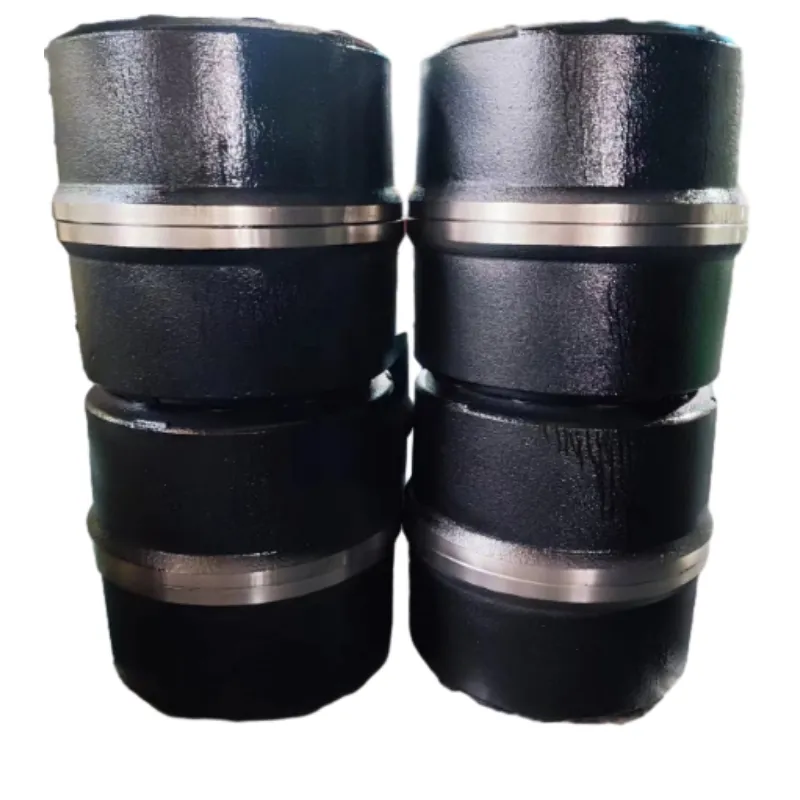
Why fleets still love brake drums
Discs get the buzz, but brake drums soak up abuse: excellent noise damping, robust against contamination, and friendly to heavy axle loads. Many customers say they see gentler wear on linings in mixed urban/off-road duty. To be honest, keeping them cool under mountain grades is the trick—material and machining quality are everything.
Industry trends (quick take)
- Shift to higher-carbon, fine-graphite gray iron (≈ G3000/EN-GJL-250) for thermal stability.
- Dynamic balancing to ISO 1940-1 G40 or better for smoother NVH.
- ECE R90-compliant replacement brake drums gaining ground in global aftermarket.
- Traceability QR codes and batch-level dyno data—surprisingly useful in warranty scrums.
Product snapshot
| Spec | Typical Value (≈, real-world may vary) |
|---|---|
| Material | Gray cast iron, SAE J431 G3000 / EN-GJL-250 |
| Hardness | HB 180–240 |
| Max radial runout | ≤ 0.05 mm |
| Dynamic balance | ISO 1940-1 G40 (option: tighter on request) |
| Diameter range | 250–420 mm common; customs available |
| Service life | ≈120,000–250,000 km (duty/liner/driver dependent) |
| Certifications | ISO 9001 / IATF 16949; ECE R90 on select models |
Process flow (how it’s made)
Materials: fine-flake graphite gray iron with controlled carbon/silicon to stabilize microstructure. Methods: green sand casting, stress relief, CNC finish machining of braking surface and pilot bore, dynamic balancing. Testing: hardness mapping, runout/roundness, metallography, balance per ISO 1940-1, and application dyno where required. We’ve seen consistent batches pass R90 brake performance when paired with approved linings.
Where they fit (and why)
- City buses, regional haul tractors, vocational trucks, trailers.
- Construction and ag equipment—dust, mud, and shock loads.
- Light commercial vehicles in stop‑start delivery routes.
Advantages: strong thermal mass, forgiving with contaminants, and—in practice—lower squeal risk than some discs. However, spec the right lining; poor friction pairing can mask good brake drums.
Vendor snapshot (what buyers compare)
| Vendor | Certs | Lead Time | Customization | Test Data |
|---|---|---|---|---|
| Hebei foundry (this product) | ISO 9001 / IATF 16949 | ≈ 25–40 days | Bolt circle, balance grade, branding | Runout/balance sheets; R90 where applicable |
| Generic importer A | ISO 9001 (varies) | ≈ 45–60 days | Limited | Basic COA only |
| Boutique EU vendor | IATF 16949 / R90 | ≈ 15–30 days | Wide | Dyno curves + PPAP |
Customization and QA
Options: custom diameters/offsets, hub pilot and bolt patterns, paint or phosphate, logo casting, tighter balance grades. Ask for PPAP level 3 and batch traceability; you’ll want the runout and hardness maps on file.
Mini case study
A regional bus fleet switched to these brake drums with mid-friction organic linings. Over 12 months, they reported around 18% fewer heat-check complaints and slightly longer lining life (their words). Not scientific, but it tracks with the denser G3000 microstructure we saw in lab cuts.
Standards and references
- SAE J431 Gray Iron Castings (G3000): https://www.sae.org/standards/content/j431/
- UNECE Regulation No. 90 (Replacement brake discs and drums): https://unece.org/transport/vehicle-regulations
- FMVSS 121 (Air brake systems for heavy vehicles): https://www.ecfr.gov/current/title-49/part-571/section-571.121
- ISO 1940-1 (Balance quality requirements): https://www.iso.org
- IATF 16949 Automotive QMS overview: https://www.iatfglobaloversight.org/
-
Understanding Drum Brakes on Cars A Complete Guide to ReliabilityNewsApr.16,2026
-
Understanding Drum Brakes on Car for Safety and PerformanceNewsApr.09,2026
-
Comprehensive Guide to Understanding Drum Brakes on a Semi TruckNewsApr.07,2026
-
Understanding the Mechanics and Maintenance of Drum Brakes on a CarNewsApr.04,2026
-
Understanding and Fixing Drum Brakes Not Self Adjusting for Vehicle SafetyNewsMar.31,2026
-
Understanding and Fixing Issues with Drum Brakes Not Releasing EffectivelyNewsMar.28,2026
-
Nissan Sentra Drum Brakes A Comprehensive Guide to Maintenance and ReplacementNewsMar.26,2026