

Brake Drums: OEM Quality, Heat-Resistant, Long-Life
Brake Drum Industry Deep-Dive: What Matters in Real-World Fleets
If you’ve ever wondered why some fleets stop smoother and need fewer shop visits, it often comes down to the quality of their brake drums. I’ve toured foundries, talked with test engineers, and, to be honest, watched techs in muddy yards swap hardware on the clock. The conclusions are not glamorous, but they’re consistent.
The Brake Drum from Haozhuang, Tangqiu Town, Ningjin County, Xingtai, Hebei Province, China uses delicate gray cast iron—yes, the classic material that still wins for damping and heat stability. In fact, many customers say the hand-drum profile looks almost vintage, but the performance—when casting and machining are done right—feels modern.
Where brake drums are still king
- Heavy trucks and tandem-axle trailers handling long downhill grades
- Buses in stop‑start urban duty (heat cycles galore)
- Light commercial vehicles in mixed delivery routes
- Agriculture and mining equipment where robustness beats fancy
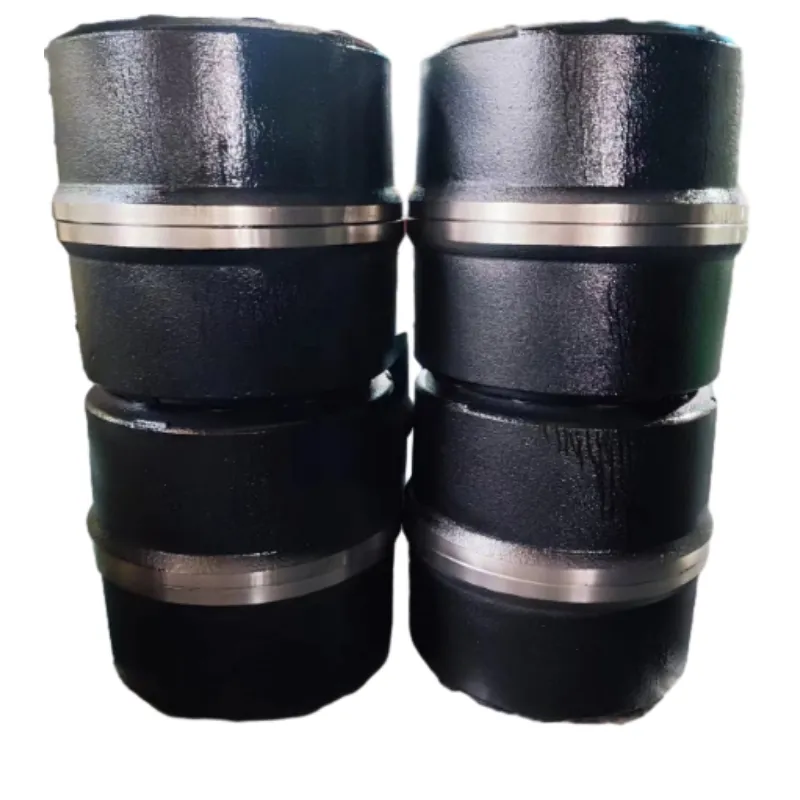
Process flow that actually moves the needle
Materials: high-grade gray cast iron (often HT250/HT300 per GB/T 9439) with controlled graphite structure for damping. Methods: optimized sand casting (core integrity and venting make or break it), followed by CNC turning, finish grinding of braking surfaces, dynamic balancing (ISO 1940‑1), and shot blasting. Some lines add a phosphate or paint coat to fight corrosion. Testing includes hardness mapping (target ≈ HB 170–220), runout checks (≤ 0.05 mm typical), and balance (≤ 20 g·cm for medium drums). Service life? Around 80,000–150,000 km in fleet use—real-world, not brochure talk—depending on loads, shoes, and driver habits.
Product snapshot
| Parameter | Typical Value (≈/range) | Notes |
|---|---|---|
| Material | Gray Cast Iron (HT250/HT300; SAE J431 G3000) | High damping, stable thermal behavior |
| Hardness | HB 170–220 | Mapped across friction surface |
| Runout | ≤ 0.05 mm | Post‑machining QA |
| Balance Grade | ≤ 20 g·cm | ISO 1940‑1 reference |
| Surface Roughness | Ra 1.6–3.2 μm | Affects noise/bed‑in |
| Service Life | 80k–150k km | Real‑world use may vary |
Vendor snapshot (quick comparison)
| Vendor | Standards/Certs | Customization | Lead Time | Notes |
|---|---|---|---|---|
| Ningchai (Hebei) | IATF 16949, ISO 9001; SAE J431/GB-T 9439 | Bolt circle, pilot, width, logo, coating | 20–35 days | Stable casting yield; balanced QA |
| Vendor A | ISO 9001 | Limited | 25–45 days | Budget-focused |
| Vendor B | IATF 16949 | Medium | 30–40 days | Good finish; higher MOQ |
Field notes and measured results
A regional logistics fleet reported 22% longer drum life and a small but welcome 0.4 dB noise reduction after switching to brake drums with tighter runout control. Another bus operator told me fade resistance improved on hilly routes—likely thanks to consistent hardness and better balance.
Customization and ordering
- Dimensions: pilot dia, bolt circle, stud holes, overall width
- Friction surface finish and coating options
- Branding: casting marks or laser etch
- MOQ: around 50–100 pcs; samples available
Standards and compliance
Production aligns with SAE J431 (gray iron), GB/T 9439, and balance verification per ISO 1940‑1. Automotive quality systems are typically IATF 16949 with ISO 9001 as baseline. Some aftermarket brake drums may also align with regional type-approval where required; always check your market.
Bottom line
Great brake drums aren’t flashy, but they save money: fewer adjustments, quieter stops, happier drivers. If you spec for heat, balance, and material integrity, the rest tends to fall into place—surprisingly often.
Authoritative citations
- SAE J431: Automotive Gray Iron Castings.
- ISO 1940‑1: Mechanical vibration — Balance quality requirements for rotors.
- IATF 16949:2016 — Quality management system requirements for automotive production.
- GB/T 9439-2010: Grey Iron Castings.
-
Understanding Drum Brakes on Cars A Complete Guide to ReliabilityNewsApr.16,2026
-
Understanding Drum Brakes on Car for Safety and PerformanceNewsApr.09,2026
-
Comprehensive Guide to Understanding Drum Brakes on a Semi TruckNewsApr.07,2026
-
Understanding the Mechanics and Maintenance of Drum Brakes on a CarNewsApr.04,2026
-
Understanding and Fixing Drum Brakes Not Self Adjusting for Vehicle SafetyNewsMar.31,2026
-
Understanding and Fixing Issues with Drum Brakes Not Releasing EffectivelyNewsMar.28,2026
-
Nissan Sentra Drum Brakes A Comprehensive Guide to Maintenance and ReplacementNewsMar.26,2026