When looking to drum brake buy, it is essential to understand that the brake drum is a critical friction pair in the drum brake system. Fixed to the tire and rotating at the same speed, it utilizes hydraulic pressure to push brake shoes against its inner edge, creating the friction necessary to bring a vehicle to a safe and controlled stop.
In the demanding environment of the automotive parts industry, selecting the right drum brake depends on balancing heat dissipation, wear resistance, and structural rigidity. Poorly designed components can lead to mechanical deformation, increased pedal force, and excessive noise, which compromise both driver safety and vehicle longevity.
This comprehensive guide analyzes the technical specifications of high-performance brake drums, explores the different casting classifications, and provides a detailed procurement framework to help you identify the most reliable components for diverse vehicle types, from heavy-duty trucks to passenger cars.

1Understanding Drum Brake Mechanics and Classifications

The operational principle of a brake drum revolves around the conversion of kinetic energy into thermal energy. When the brake pedal is pressed, oil pressure forces the brake shoes outward against the internal circumference of the drum. This friction halts the tire's rotation. The assembly consists of the base plate, brake cylinder, and connecting elements, all working in unison to ensure stability.
Integral casting drums are preferred for their monolithic strength, whereas combined versions offer a balance between weight reduction and heat management. Choosing the correct classification is vital for maintaining the friction pair's integrity under extreme load conditions.
From a manufacturing perspective, the focus remains on achieving optimal wall thickness and reinforcement rib placement to prevent deformation during rapid deceleration.
2Core Technical Advantages of Precision Casting
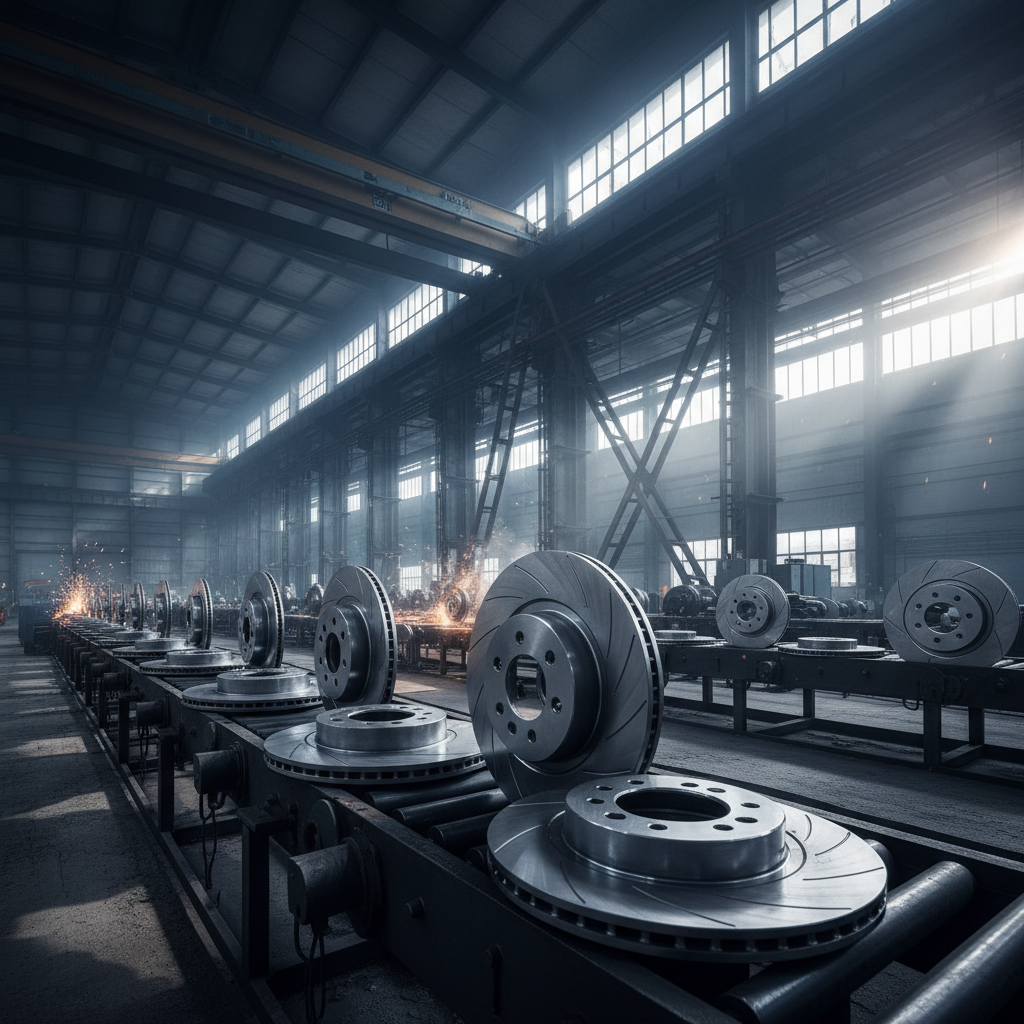
High-quality brake drums are defined by their ability to withstand immense thermal stress without losing their geometric shape. Precision casting ensures that the inner surface remains perfectly concentric, which prevents vibration and "brake judder" during operation. The use of advanced CNC vertical lathes in production allows for tighter tolerances and smoother finishes.
By optimizing the metallurgical composition, manufacturers can enhance wear resistance, reducing the frequency of shoe replacements. The inclusion of specific reinforcement ribs not only increases rigidity but also acts as a heat sink, drawing warmth away from the friction surface.
Moreover, automated paint lines and surface treatments prevent corrosion, ensuring that the drum maintains its structural integrity even in harsh environments with salt or moisture exposure.
3Critical Application Scenarios and Safety Constraints
Brake drums are extensively used in heavy-duty vehicles, trailers, and rear axles of passenger cars due to their high torque capacity and reliability in parking scenarios. However, they are susceptible to "brake fade" if the heat cannot be dissipated quickly enough during prolonged downhill braking, which can lead to a temporary loss of stopping power.
Maintenance is a critical constraint; uneven wear or cracks in the drum can lead to catastrophic failure. Regular inspection using spectrometers and hardness testers ensures that the material has not undergone detrimental phase changes due to overheating.
To mitigate these risks, fleet operators must adhere to strict replacement intervals and ensure that the contact between the shoe and the drum is uniform across the entire friction surface.
4Performance Metrics and Thermal Analysis
Analyzing the performance of a brake drum requires a look at its thermal conductivity and dynamic balance. A drum that is not balanced will cause vibrations that travel through the chassis, affecting steering and increasing the wear on suspension components.
The efficiency of a drum brake is often measured by its ability to maintain a consistent coefficient of friction across a wide temperature range. High-grade cast iron provides the necessary thermal mass to absorb heat without immediate expansion.
drum brake buy Performance Metrics
As shown in the metrics, precision-engineered drums outperform industry averages in heat dissipation and structural rigidity, which directly correlates to shorter stopping distances and improved safety margins under load.
5Procurement Criteria for Industrial Brake Systems
When executing a drum brake buy, procurement teams should prioritize OE compatibility and certification standards such as ISO/TS16949. Compatibility is not just about fitment but about matching the weight and torque requirements of the specific vehicle model, such as Mercedes Benz, SAF, or DAF systems.
Supplier evaluation should focus on the quality of testing equipment. A manufacturer possessing CS analyzers and tensile testing machines can provide guaranteed material properties, reducing the risk of premature cracking.
Finally, consider the total cost of ownership, where a slightly higher initial investment in a wear-resistant drum leads to lower long-term maintenance costs and reduced vehicle downtime.
6Future Trends in Automotive Casting Materials
The industry is shifting towards hybrid materials to combat the inherent weight of cast iron. Light alloy combined drums are becoming more prevalent in mid-sized commercial vehicles, offering a significant reduction in unsprung weight, which improves fuel efficiency and handling.
Advancements in automated paint lines and nano-coatings are also extending the life of the drum by preventing oxidation in high-humidity regions. This is particularly important for global supply chains serving Russia and Southeast Asia.
As electric vehicles increase in number, the demand for regenerative braking is rising, but the drum brake remains indispensable as a fail-safe mechanical backup and high-torque parking brake.
7Comparison of Brake Drum Material Options
Selecting the right material involves a trade-off between weight, cost, and thermal performance. While cast iron is the standard for its reliability and low cost, specialized alloys are used where performance outweighs the budget.
The following table compares the most common drum brake configurations used in the current automotive market to assist in the selection process.
| Material Type | Best Use Case | Main Strength | Primary Limitation |
|---|---|---|---|
| Integral Cast Iron | Heavy-Duty Trucks | Maximum Durability | High Weight |
| Steel/Iron Combined | Medium Commercial | Balanced Cost | Medium Heat Fade |
| Light Alloy Combined | Light Commercial | Weight Reduction | Higher Cost |
| High-Carbon Iron | Performance Rear | Excellent Cooling | Faster Wear |
| Coated Cast Iron | Corrosive Environments | Anti-Rust | Surface Maintenance |
| Reinforced Alloy | Specialty Industrial | Extreme Rigidity | Complex Manufacturing |
For most industrial applications, integral casting remains the safest choice due to its proven track record in maintaining structural integrity under emergency braking conditions.
Frequently Asked Questions
Conclusion
Selecting the right components when you drum brake buy is a critical decision that impacts both vehicle safety and operational costs. By focusing on precision casting, thermal management, and OE compatibility, fleet managers and technicians can significantly reduce the risk of mechanical failure and improve braking efficiency.
Hebei Ningchai Machinery Co., Ltd. leverages advanced CNC machining and rigorous testing to deliver high-performance automotive castings. For those evaluating suitable solutions for their fleet or production needs, detailed product specifications and compatibility lists are available at www.hbncbrakedrum.com.