
Regional Analysis
The Automotive Components Landscape in Egypt
Analyzing the intersection of heavy logistics, harsh climates, and industrial demand.
The Egyptian automotive aftermarket is characterized by a heavy reliance on imported commercial vehicles and a robust logistics sector centered around the Suez Canal and Cairo's industrial zones. Due to the extreme temperature fluctuations and the presence of abrasive desert sands, the demand for high-durability braking components is significantly higher than in temperate regions. Local workshops and fleet operators prioritize parts that can withstand prolonged thermal cycles without warping, making high-precision casting a critical requirement for safety and operational efficiency.
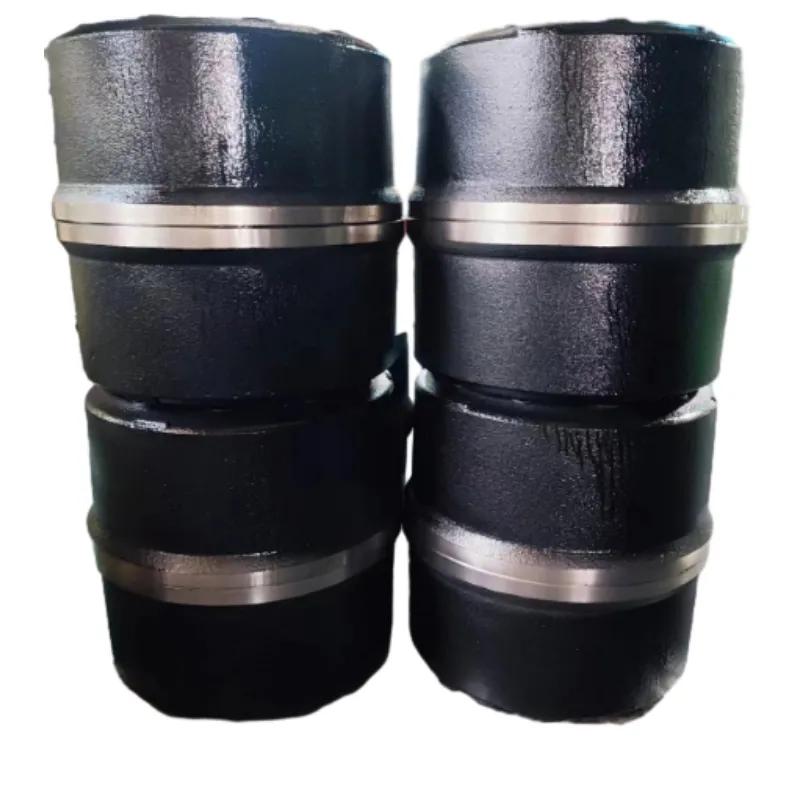
Current market trends show a shift toward integrating more sophisticated braking technologies, including a growing interest in abs drum brakes to improve safety for heavy-duty transport. There is an increasing movement away from generic, low-cost imports toward certified manufacturers who can provide ISO/TS16949 compliance. This transition is driven by a need to reduce vehicle downtime and a growing awareness of the long-term cost benefits associated with components that maintain their structural integrity over longer service intervals.
The outlook for the Egyptian market remains positive, with infrastructure expansion driving the need for more reliable heavy-duty transport. However, the primary constraint remains the volatility of import costs and the need for a steady supply of a wide range of models. Companies that can offer a comprehensive product lineup—covering European, Japanese, and Korean specifications—while maintaining strict quality control, are best positioned to capture the market share as Egypt continues to modernize its logistics infrastructure.
Industry Progress
The Evolution of Brake Casting Technology
From basic sand casting to CNC-precision engineered safety components.
Early Phase
Traditional Casting
Initial production relied on standard smelting and manual lathes, producing functional but inconsistent components with higher variance in material density.
Mid Phase
Precision Automation
The introduction of CNC vertical lathes and automated paint lines allowed for tighter tolerances and better corrosion resistance, significantly increasing part lifespan.
Current Phase
Quality Certification
Integration of ISO/TS16949 standards and SAI certification ensures that every casting meets rigorous international safety and performance benchmarks.
From Casting to Engineering
The industry has transitioned from merely "pouring metal" to a comprehensive engineering process. Modern brake drums now incorporate specific alloy ratios and heat-treatment cycles to prevent the "heat checking" (surface cracking) common in high-load applications.
The Rise of Digital Metrology
The adoption of spectrometers and metallographic microscopes has allowed manufacturers to analyze the crystalline structure of the iron, ensuring that the hardness is consistent throughout the drum wall to prevent uneven wear.
Sustainability in Smelting
Modern electric smelting furnaces have replaced older, more polluting methods, allowing for tighter control over temperature and reducing impurities in the melt, which directly translates to higher fatigue strength in the final product.
Future Outlook
Strategic Trends in Braking Systems
Adapting to the requirements of modern transport and safety regulations.
Lightweight High-Strength Alloys
Developing casting techniques that reduce unsprung weight without compromising the structural integrity of the drum, improving overall fuel efficiency and vehicle handling.
Enhanced Corrosion Resistance
Implementation of advanced automated paint lines and surface coatings to protect components from the salty and humid coastal air of the Mediterranean and Red Sea.
Integration with Electronic Braking
Optimizing drum geometries for better compatibility with ABS and Electronic Stability Control (ESC) systems, reducing the likelihood of wheel lock-up during emergency braking.
Predictive Maintenance Modeling
Moving toward the use of digital twins to predict the wear rate of gunite brake drums and other components based on specific regional duty cycles.
The push toward higher safety standards is fundamentally changing the way brake components are manufactured. No longer is the industry focused solely on the physical strength of the casting; there is now a profound emphasis on the metallurgical purity and the precision of the final machining. In regions like Egypt, where the environment is unforgiving, the difference between a standard part and an engineered part can be measured in thousands of kilometers of additional service life and, more importantly, in the reliability of the vehicle's stopping distance.
Furthermore, the globalization of automotive fleets means that a single operator might manage vehicles from four different continents. This creates a demand for "universal quality"—a standard that meets or exceeds the original equipment manufacturer (OEM) specifications regardless of the vehicle's origin. By investing in comprehensive testing equipment, such as tensile testing machines and spectrometer analysis, manufacturers are providing the empirical data needed to prove that aftermarket components can match or outperform original parts in extreme conditions.
Application Contexts
Real-World Braking Implementations in Egypt
How precision brake drums perform across different Egyptian operational environments.
01
Long-Haul Logistics on the Cairo-Alexandria Desert Road
Heavy-duty trucks transporting goods between the port of Alexandria and Cairo encounter sustained high speeds and frequent braking for checkpoints. In this scenario, the high thermal mass of our precision drums prevents overheating and brake fade, ensuring the driver maintains control during emergency stops even in peak summer temperatures.
02
Urban Distribution in Dense Cairo Traffic
Light commercial vehicles performing "last-mile" deliveries in Cairo face stop-and-go traffic that causes rapid heat cycling. Our abs drum brakes provide the consistent friction coefficient required to prevent wheel lock-up in congested urban environments, reducing wear on the brake shoes.
03
Heavy Equipment Operations in New Administrative Capital Construction
Construction vehicles and cranes operating in the New Administrative Capital construction sites often utilize crane brake drum components for precision load positioning. These drums are engineered for extreme torque and stability, preventing slippage when holding massive loads in sandy, uneven terrain.
04
Coastal Transport along the Mediterranean Coast
Vehicles operating in coastal cities like Alexandria are exposed to salt-laden humidity, which accelerates oxidation. Our automated paint line provides a protective barrier that prevents rust from forming on the drum exterior, ensuring that the components remain structurally sound and easy to service over time.
05
Inter-City Passenger Transport on Nile Delta Routes
Buses transporting passengers through the Nile Delta require high reliability to avoid service interruptions. By using drums with dynamic balance certification, operators experience less vibration and noise, improving passenger comfort while extending the intervals between required maintenance checks.
Industry Perspectives
Representative Operational Outcomes
Illustrating the impact of precision engineering on fleet maintenance and safety.
Transitioning to precision-cast drums significantly reduced the frequency of surface machining for a heavy-duty fleet. The consistency in material hardness meant that wear was uniform across all axles, allowing for synchronized replacement schedules and reduced unplanned downtime during the peak harvest season.
Using a supplier that provides nearly 400 models solved the challenge of managing a mixed fleet of Japanese and European trucks. The precision of the CNC-machined parts meant that installation was seamless, with no need for custom adjustments, which significantly lowered labor costs in the workshop.
The integration of dynamic balancing in the brake components has noticeably reduced chassis vibration in heavy-duty applications. For operators moving fragile goods across the desert, this level of stability is essential for both vehicle longevity and cargo safety.
Our Legacy
Hebei Ningchai Machinery: A Tradition of Quality
Building trust through metallurgical expertise and industrial precision since 2007.
2007
Company Establishment
Founded as Ningjin Lingyun Casting Mold Co., Ltd., the company began its journey focusing on the fundamentals of high-quality mold casting and automotive component production.
2014
SAI Quality Certification
The company achieved SAI certification, marking a major milestone in its commitment to delivering the highest standards of quality and efficiency in its manufacturing processes.
2015
Strategic Rebranding
The company officially changed its name to Hebei Ningchai Machinery Co., Ltd. to better reflect its expanding business activities and its role as a leading global brake drum manufacturer.
Technical Support
Expert Insights on Brake Component Selection
Answers to common technical and procurement questions for automotive operators.
What are the primary advantages of choosing CNC-machined brake drums over standard castings?
CNC-machined drums offer significantly higher dimensional accuracy and surface flatness. This reduces brake chatter and uneven wear, which are common in standard castings. For operators in Egypt, this means a more consistent friction surface, reducing the frequency of brake drum turning and improving the overall stopping efficiency of the vehicle.
How does ISO/TS16949 certification impact the reliability of aftermarket brake components?
ISO/TS16949 is a rigorous quality management standard specifically for the automotive industry. It ensures that every stage of production—from the electric smelting of raw alloys to final dynamic balancing—is documented and controlled. This eliminates material inconsistencies, reducing the risk of premature failure or cracking under heavy loads.
Can these brake drums be integrated into existing ABS systems for commercial trucks?
Yes, our abs drum brakes are specifically engineered to work with anti-lock braking systems. By maintaining strict tolerances and uniform material density, our drums ensure that the ABS sensors and actuators can operate accurately, preventing wheel lock-up and maintaining steering control during emergency braking on sandy or wet surfaces.
What testing processes are used to ensure the drums can withstand extreme Egyptian heat?
We use a combination of spectrometers to verify alloy composition and hardness testers to ensure the material can withstand high thermal stress. Additionally, the use of electric smelting furnaces allows for a more homogenous metal structure, which is critical for effective heat dissipation and preventing thermal fade during long descents or heavy hauling.
How do I determine the correct model for a mixed fleet of European and Asian vehicles?
With nearly 400 models available, the best approach is to provide the vehicle's VIN or the original OEM part number. Our technical team can then match the specification to our precision-engineered equivalents, ensuring that the fit and function meet the exact requirements of the vehicle's original design while offering improved durability.
What is the typical service life extension when switching to dynamic-balanced brake drums?
While exact lifespan depends on the duty cycle, dynamic balancing significantly reduces the parasitic vibrations that wear down wheel bearings and suspension bushings. By eliminating centrifugal imbalance, the entire braking assembly operates more smoothly, which typically extends the service interval of related components and reduces overall maintenance costs.
Secure Your Fleet
Upgrade to Precision-Engineered Braking Solutions in Egypt
Whether you are managing a logistics hub in Cairo or a transport fleet across the Nile Delta, ensuring the safety and durability of your braking system is paramount. Hebei Ningchai Machinery provides the technical expertise and manufacturing scale to support your operational needs with certified, high-performance automotive castings. Discuss your specific model requirements with our team today to optimize your fleet's safety and reduce maintenance costs.
Discuss Your Requirements