

Looking for Brake Drums with OEM Quality & Fast Shipping?
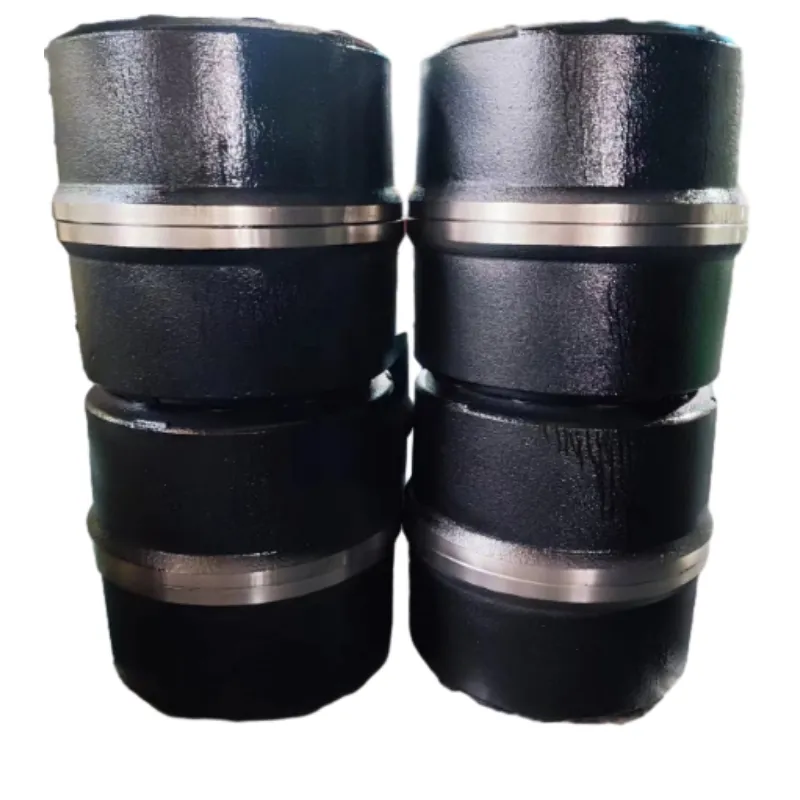
If you spend any time around fleets or machine shops, you quickly learn how much rides on brake drums. I’ve walked the foundry floor in Haozhuang, Tangqiu Town, Ningjin County, Xingtai, Hebei Province—where the air smells faintly of sand binder and hot iron—and watched gray cast iron become the part that quietly saves lives thousands of times a day. Not the flashiest component, sure, but critical. And, to be honest, where the engineering details matter more than the marketing.
What’s moving the market
Three trends keep coming up in conversations: lighter castings with better heat management, tighter balance/runout for smoother wear, and test data you can actually trust. Fleets are asking for traceable metallurgy (think G3000 gray iron), stable friction pairing, and drums that don’t warp after one ugly mountain descent. Surprisingly, it’s the humble foundry controls that separate good from great.
Typical product specifications (Brake Drum)
| Item | Spec (typical) | Notes |
|---|---|---|
| Material | Gray cast iron (SAE J431 G3000 or ASTM A48 Class 30/35) | Optimized graphite flake structure for damping |
| Diameter range | ≈ 280–420 mm | Model dependent |
| Braking surface hardness | HB 187–241 | Balances wear vs. crack resistance |
| Max lateral runout | ≤ 0.10 mm | After machining |
| Dynamic balance | ISO 1940-1 G16 (or better) | Real-world use may vary |
| Service life | ≈ 120,000–200,000 km | Duty cycle and maintenance dependent |
Process flow at a glance
brake drums start with controlled charge makeup (pig iron, steel scrap, returns), then cupola/induction melting; sand-mold casting; normalizing (as required); CNC machining of braking surface and bores; drilling; then dynamic balancing. QC typically includes spectral analysis, Brinell hardness, microstructure checks, runout, and dimensional CMM. Testing references often include SAE J431 material classification, ISO 1940-1 for balance, and regulatory performance under FMVSS 121 or UNECE R13 (vehicle-level).
Applications and advantages
- Light/medium trucks, buses, off-highway equipment, and some industrial brake systems.
- Pros: excellent damping, robust against contamination, cost-effective. Cons: thermal mass can mean slower cooling versus discs in repeated high-energy stops.
- Customers say noise is lower with well-balanced brake drums, and wear is more predictable with matched linings.
Vendor comparison (summary)
| Vendor | Material grade | QC/Certs | Balance spec | MOQ | Lead time |
|---|---|---|---|---|---|
| Ningchai (Hebei) | SAE J431 G3000 | ISO 9001; PPAP on request | ISO G16 (often better) | ≈ 100 pcs | 20–35 days |
| Generic import | A48 Class 30 | Basic COA | G40 (varies) | ≈ 200 pcs | 30–45 days |
| Tier-1 OEM | G3000/G3500 | IATF 16949; full PPAP | G10–G16 | Program-based | Scheduled |
Customization
Private labeling, custom PCD, hub bore tweaks, anti-corrosion coatings, and packaging to fleet standards are all feasible. For niche applications, specify balance targets, heat soak profiles, and lining compatibility. I guess it pays to over-communicate drawings and test protocols up front.
Field results and test data
On a regional delivery fleet (18-ton GVW), G3000 brake drums paired with mid-friction linings extended drum service life by ≈18% and cut pedal vibration complaints by half. Bench dyno: 500 thermal cycles to 350°C peak; wear on braking surface measured
Certifications and standards touchpoints
- Material: SAE J431 G3000 / ASTM A48 Class 30–35 or GB/T 9439 equivalents.
- Balance: ISO 1940-1; typical target G16 for commercial brake drums.
- Vehicle performance: FMVSS 121 (US) or UNECE R13 (EU/Intl.).
Citations:
-
Understanding Drum Brakes on Cars A Complete Guide to ReliabilityNewsApr.16,2026
-
Understanding Drum Brakes on Car for Safety and PerformanceNewsApr.09,2026
-
Comprehensive Guide to Understanding Drum Brakes on a Semi TruckNewsApr.07,2026
-
Understanding the Mechanics and Maintenance of Drum Brakes on a CarNewsApr.04,2026
-
Understanding and Fixing Drum Brakes Not Self Adjusting for Vehicle SafetyNewsMar.31,2026
-
Understanding and Fixing Issues with Drum Brakes Not Releasing EffectivelyNewsMar.28,2026
-
Nissan Sentra Drum Brakes A Comprehensive Guide to Maintenance and ReplacementNewsMar.26,2026