

Brake Drums for Heavy Trucks - Durable, Balanced, OEM-Grade
If you work around commercial vehicles long enough, you learn to respect the humble drum. I’ve seen fleets save fortunes just by choosing the right Brake Drums—not flashy, but mission-critical.
Quick context: these are cast-iron, hand-drum-looking components that clamp with shoes to convert kinetic energy to heat. The unit I’m reviewing comes from Haozhuang, Tangqiu Town, Ningjin County, Xingtai, Hebei Province, China—an area that’s become a serious casting hub. To be honest, there’s a lot of noise in the market; but this maker’s consistency caught my eye.
Why Brake Drums are still trending
- Heavy-duty durability: trucks, buses, and trailers still rely on Brake Drums for robust heat capacity and simple parking-brake integration.
- Value engineering: electrification pushes cost and weight balancing; gray iron drums with optimized ribs remain cost-effective.
- Corrosion-focused: more fleets specify coated Brake Drums to reduce seized wheels and ugly hubs in winter regions.
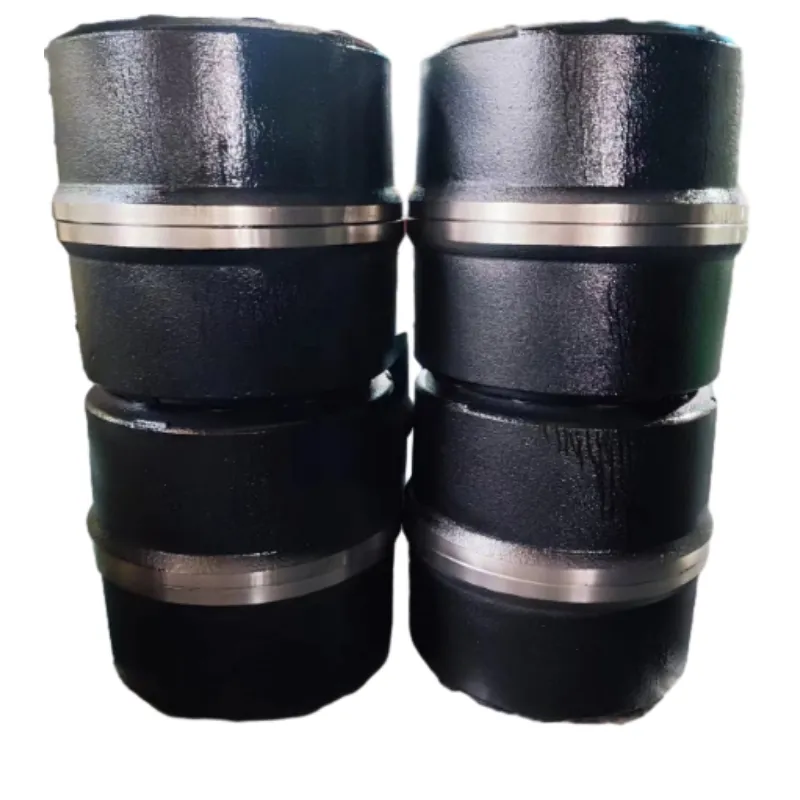
Product snapshot
Made from gray cast iron (think SAE J431 G3000 grade), the drum is machined, balanced, and checked for runout. Many customers say the real surprise is how quiet these drums bed-in after the first 300–500 km.
| Spec | Typical Value (≈, real-world may vary) |
|---|---|
| Material | Gray Cast Iron, SAE J431 G3000 / ASTM A48 Class 35 |
| Outer Diameter | ≈ 410–420 mm (truck/bus fitments) |
| Braking Surface Width | ≈ 160–180 mm |
| Weight | ≈ 35–45 kg |
| Hardness | 190–240 HBW |
| Runout | ≤ 0.08 mm (post-machining) |
| Balance | ISO 1940-1 Grade G16 |
| Coating | Anti-corrosion primer; salt spray tested (ASTM B117) |
| Service Life | ≈ 120,000–300,000 km (duty-cycle dependent) |
Process flow, briefly
- Materials: pig iron + steel scrap + inoculants tuned for fine Type A graphite (ASTM A247).
- Methods: green-sand casting; controlled cooling to limit residual stress.
- Machining: CNC turning/boring; finish grind on braking surface.
- Balancing: according to ISO 1940-1.
- Testing: hardness map, runout, dynamic balance, microstructure, and random X-ray/UT on batches.
- Coating: primer or e-coat; corrosion check via ASTM B117 exposure.
- Traceability: heat/lot code laser-marked; quality system typically ISO 9001/IATF 16949.
Where Brake Drums shine
Heavy trucks, city buses (lots of stop-start), semi-trailers, ag machinery, and mining support vehicles. Advantages include thermal mass, forgiving shoe contact, and strong parking-brake hold. Actually, for cold climates and dusty sites, drums can be the practical choice.
Vendor snapshot (what fleets compare)
| Vendor | Origin | Material/Std | Certs | MOQ | Lead Time |
|---|---|---|---|---|---|
| Ningchai Brake Drum | Hebei, China | G3000 gray iron | ISO 9001 / IATF 16949 (supplier-level) | ≈ 50–100 pcs | ≈ 25–35 days |
| Regional Distributor | Mixed | Mixed grades | Varies | Low | Stock-dependent |
| Global Aftermarket Brand | Global | G3000 or proprietary | Global OEM-tier | Medium | ≈ 30–45 days |
Customization
Hub pilot, bolt circle, stud diameter, offset, rib design, and paint color can be tailored. For fleets, matched sets of Brake Drums and shoes (pre-arched) speed up maintenance cycles.
Field notes and case snippets
- Urban delivery fleet (18-ton GVW): warranty returns dropped by ~28% over 12 months after switching to coated Brake Drums; average runout held at 0.05 mm on incoming inspection.
- Quarry trailers: operators reported fewer heat checks; hardness held ~205–215 HBW across samples, and balance within ISO G16 without extra weights.
Feedback? “Surprisingly quiet after the first week,” one maintenance manager told me. I guess that’s the microstructure and finish doing their job.
Safety and compliance
While drums themselves aren’t certified like friction linings, your braking system still needs to meet UNECE Reg. 13 performance. Ask for material certs, balance reports, and dimensional sheets with each lot. It seems basic—but it’s the difference between smooth stops and chasing vibrations for months.
- SAE J431: Automotive Gray Iron Castings (G3000).
- ISO 1940-1: Mechanical vibration — Balance quality requirements for rotors.
- ASTM B117: Standard Practice for Operating Salt Spray (Fog) Apparatus.
- IATF 16949: Automotive Quality Management System Requirements.
- UNECE Regulation No. 13: Uniform provisions concerning the approval of vehicles of categories M, N, and O with regard to braking.
-
Understanding Drum Brakes on Cars A Complete Guide to ReliabilityNewsApr.16,2026
-
Understanding Drum Brakes on Car for Safety and PerformanceNewsApr.09,2026
-
Comprehensive Guide to Understanding Drum Brakes on a Semi TruckNewsApr.07,2026
-
Understanding the Mechanics and Maintenance of Drum Brakes on a CarNewsApr.04,2026
-
Understanding and Fixing Drum Brakes Not Self Adjusting for Vehicle SafetyNewsMar.31,2026
-
Understanding and Fixing Issues with Drum Brakes Not Releasing EffectivelyNewsMar.28,2026
-
Nissan Sentra Drum Brakes A Comprehensive Guide to Maintenance and ReplacementNewsMar.26,2026