

Brake Drums for Trucks | OEM-Grade, Precision-Cast, Durable
Brake Drum Market Reality Check: What Matters in 2025
If you work around fleets or aftermarket parts counters, you already know the unsung hero isn’t always the disc. It’s the drums—specifically, Brake Drums—that quietly shoulder heat, dust, and abuse day after day. To be honest, I’ve seen more vehicles rescued by a well-cast drum than by any single electronics update. This piece digs into specs, testing, and the less glamorous (but vital) sourcing decisions. The example product here originates from Haozhuang, Tangqiu Town, Ningjin County, Xingtai, Hebei, China—an area that lives and breathes casting.
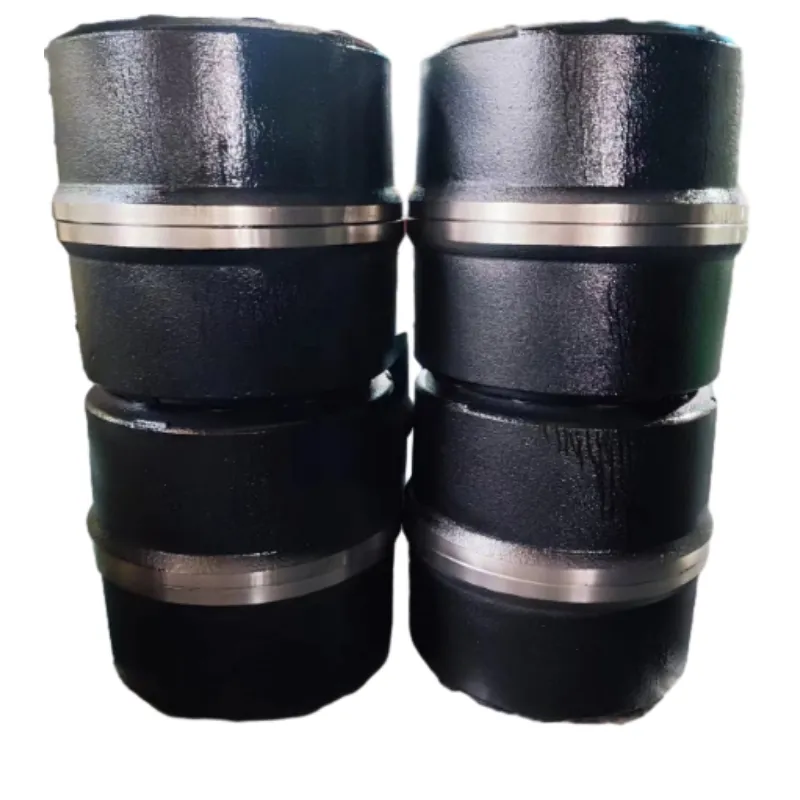
Industry trends (and why drums aren’t going away)
Electrification and regen are reshuffling the deck, yet rear Brake Drums remain common in small cars, and dominate on trucks, trailers, and buses because of thermal mass, parking brake integration, and cost. In fact, sealed designs tend to resist winter corrosion better than some low-end discs. Fleets still report predictable wear patterns and easier service windows with stout drum setups.
How the good ones are made
- Materials: gray cast iron (ISO 185/ASTM A48), typically Class 35–45; strong damping, good machinability.
- Melting & inoculation: induction melt, spectrometer-verified chemistry (C, Si, Mn, P, S); inoculants for graphite control.
- Casting: resin-bonded sand molds; riser design to prevent shrinkage cavities; slow cool to reduce residual stress.
- Heat treatment: optional stress relief/aging for dimensional stability.
- Machining: CNC turning of braking surface and hub bore; fine finish to ≈Ra 1.6–3.2 μm.
- Balancing: per ISO 1940-1 (often G16 for drums used on trucks).
- Testing: hardness (HB 180–240), runout, bore tolerance, dynamic balance, metallography, and dynamometer fade checks.
Representative specifications for a Truck/Bus Drum
| Nominal diameter | ≈ 410–420 mm (varies by model) |
| Brake width | 160–200 mm |
| Material | Gray cast iron, ISO 185/ASTM A48 Class 35–45 |
| Hardness | HB 180–240 |
| Total indicator runout | ≤ 0.10 mm (new) |
| Imbalance | Meets ISO 1940-1 G16 |
| Max wear (oversize) | Typically +1.0 mm over nominal (check OEM) |
| Service life | ≈ 150,000–300,000 km (duty-dependent) |
Applications and advantages
Heavy-duty trucks, buses, trailers, off-highway equipment, and economy cars’ rear axles. Advantages: thermal capacity, cost efficiency, integrated parking brake, solid performance in grit and road salt. Many customers say they prefer the predictable wear and simpler maintenance intervals of Brake Drums in mixed fleets.
Vendor comparison (what I look for)
| Vendor | Strengths | Notes |
|---|---|---|
| Ningchai (Origin: Haozhuang, Ningjin, Xingtai, Hebei) | IATF 16949-minded process, ISO 185/ASTM A48 materials, ISO 1940 balancing, custom bolt circles/logos | Lead time ≈ 25–35 days; MOQ moderate; competitive TCO |
| Trading house (mixed sources) | Broad catalog, quick spot buys | Specs vary; request mill certs and balance reports |
| Small local foundry | Fast custom runs, proximity | Check chemistry/hardness control; may lack dynamometer data |
Testing, standards, and real-world data
- Material: SAE J431/ASTM A48 or ISO 185 certification; spectrometer reports on each heat.
- Performance: dyno cycles akin to SAE J2522-style protocols; fade
- Regulatory: FMVSS 121 (air brake systems), ECE R13 (vehicle braking) compliance at system level.
- Quality: IATF 16949 manufacturing discipline; balance to ISO 1940-1; runout recorded per part.
Customization
Logo cast-in, hub bore/PCD options, special coatings (phosphate/paint), rust-preventive oil, and packaging fit for long sea routes. For fleets, I recommend laser-marking max dia and batch traceability on every Brake Drums unit—saves headaches.
Mini case study
A regional bus operator swapped to gray iron drums with tighter runout control. Result: brake judder complaints dropped by ~40%, lining life improved ~12% (same routes, 9 months). Not flashy, but the accountant noticed. Surprisingly, the biggest win was fewer mid-route service interruptions.
Citations
- SAE J431: Specification for Automotive Gray Iron Castings — https://www.sae.org
- ASTM A48/A48M: Standard Specification for Gray Iron Castings — https://www.astm.org/a0048_a0048m
- ISO 185: Grey cast irons — Classification — https://www.iso.org/standard/52229.html
- ISO 1940-1: Mechanical vibration — Balance quality requirements — https://www.iso.org/standard/54865.html
- FMVSS 121: Air Brake Systems (eCFR) — https://www.ecfr.gov/current/title-49/subtitle-B/chapter-V/part-571/section-571.121
-
Understanding Drum Brakes on Cars A Complete Guide to ReliabilityNewsApr.16,2026
-
Understanding Drum Brakes on Car for Safety and PerformanceNewsApr.09,2026
-
Comprehensive Guide to Understanding Drum Brakes on a Semi TruckNewsApr.07,2026
-
Understanding the Mechanics and Maintenance of Drum Brakes on a CarNewsApr.04,2026
-
Understanding and Fixing Drum Brakes Not Self Adjusting for Vehicle SafetyNewsMar.31,2026
-
Understanding and Fixing Issues with Drum Brakes Not Releasing EffectivelyNewsMar.28,2026
-
Nissan Sentra Drum Brakes A Comprehensive Guide to Maintenance and ReplacementNewsMar.26,2026