

Brake Drums for Trucks | OEM-Grade, Durable, Factory-Direct
Brake Drum: Notes From the Shop Floor and the Test Bench
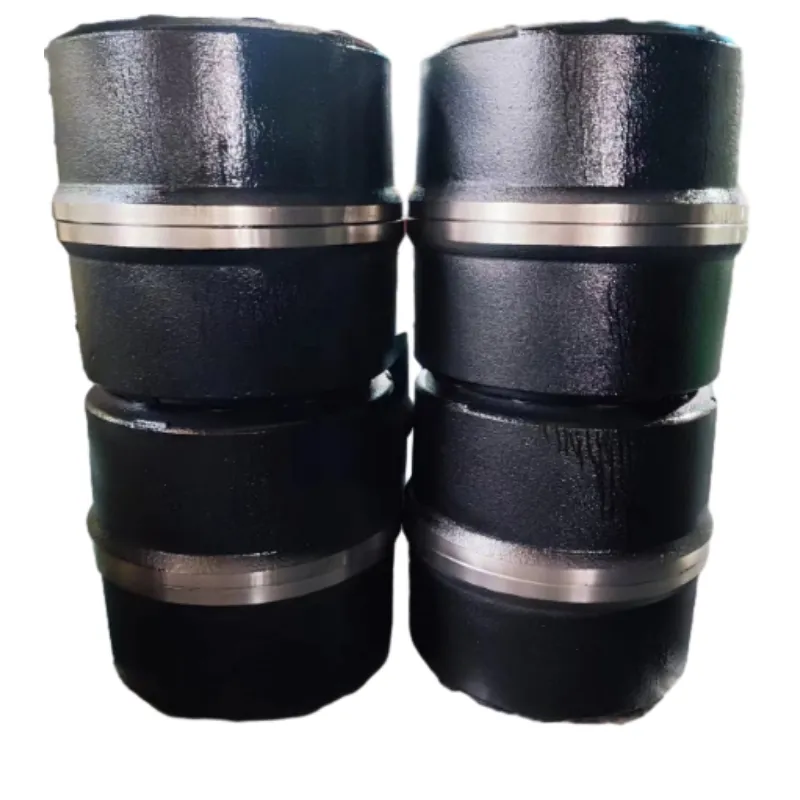
If you work around brake drums long enough, you learn two truths: material matters, and machining consistency saves fleets money. This particular Brake Drum comes out of Haozhuang, Tangqiu Town, Ningjin County, Xingtai, Hebei—an area that, to be honest, is known in the trade for getting gray cast iron right.
What’s changing in the industry
Electrification is creeping into heavy vehicles, but brake drums aren’t going away; regen braking actually shifts heat spikes, which, surprisingly, can favor robust drums on the rear axles. Fleets ask for longer lining life, lower NVH, and stable performance in mountain routes. Many customers say coated hubs and tighter balance grades cut vibration complaints after tire rotations.
Core specs you can actually use
| Item | Spec (≈ / typical) |
|---|---|
| Material | Gray cast iron (SAE J431 G3000 / ASTM A48 Class 35; GB/T 9439 equivalent) |
| Outer Ø / Braking Ø | ≈ 420–450 mm / 410 mm |
| Wall thickness | ≈ 12–15 mm (model dependent) |
| Hardness | HB 180–240 |
| Dynamic balance | ISO 1940-1 G16 (real-world use may vary) |
| Surface roughness (braking face) | Ra 3.2 μm after finish cut |
| Max rebore limit | +1.5 mm typical (check stamping) |
| Service life | ≈ 150,000–300,000 km on HD trucks; duty-dependent |
How it’s made (short version)
- Charge prep and melting (low-phosphorus gray iron) → inoculation & controlled cooling
- Mold pouring, riser design tuned to avoid porosity → shakeout & shot-blast
- Stress relief heat treatment (yep, it matters for stability) → CNC rough/finish turning
- Bolt circle drilling → dynamic balancing → anti-corrosion coating
- Inspection: hardness, dimensions (ISO 2768-m), NDT spot checks, balance log, runout ≤ 0.15 mm
Where it’s used and why fleets pick it
City buses, long-haul tractors, cement mixers, and ag trailers still lean on brake drums for durability and cost-per-mile. Advantages: predictable thermal behavior, forgiving to minor contamination, and straightforward maintenance roadside. A Midwest fleet told me they saw 6–8% longer lining life after switching to higher-balance-grade drums—small change, real money.
Vendor snapshot (field notes)
| Vendor | Casting method | Certs | Lead time | Notes |
|---|---|---|---|---|
| Ningchai (Hebei) | Green sand + stress relief | ISO 9001, IATF 16949 | ≈ 20–30 days | Solid balance control; flexible bolt patterns |
| Vendor B (SEA) | Shell mold | ISO 9001 | ≈ 35–45 days | Good finish, limited customization |
| Vendor C (EU) | DISA line | IATF 16949 | ≈ 25–35 days | Higher price; excellent traceability |
Customization options
Bolt circle and pilot diameter, offset/backspace, hub cap interface, logo casting, anti-corrosion coating color, balance grade target, and packaging per fleet depot workflow. Replacement for OE references available; ECE R90 equivalence where applicable (passenger/light-duty ranges).
Test data (snapshot) and case note
Inertia dyno run: 9 descents, peak drum temp ≈ 420–450°C, fade within SAE J661 lining envelope; lateral runout held under 0.12 mm post-cycle. One regional logistics fleet reported 30% longer change intervals and a 7% TCO improvement over 12 months after moving to brake drums with tighter balance and hardness control. Your mileage, as always, depends on route and driver behavior.
Standards/Compliance touchpoints: SAE J431 (material), ISO 1940-1 (balance), FMVSS 121 / ECE R13 (system), ECE R90 (replacement discs/drums, where applicable), ISO 9001/IATF 16949 (quality system).
References
- SAE J431: Automotive Gray Iron Castings.
- ISO 1940-1: Mechanical vibration—Balance quality requirements for rotors.
- FMVSS 121: Air Brake Systems (NHTSA, U.S.).
- ECE R13: Uniform provisions concerning braking of vehicles.
- ECE R90: Replacement brake linings and brake discs/drums.
- GB/T 9439: Gray Iron Castings (China National Standard).
-
Understanding Drum Brakes on Cars A Complete Guide to ReliabilityNewsApr.16,2026
-
Understanding Drum Brakes on Car for Safety and PerformanceNewsApr.09,2026
-
Comprehensive Guide to Understanding Drum Brakes on a Semi TruckNewsApr.07,2026
-
Understanding the Mechanics and Maintenance of Drum Brakes on a CarNewsApr.04,2026
-
Understanding and Fixing Drum Brakes Not Self Adjusting for Vehicle SafetyNewsMar.31,2026
-
Understanding and Fixing Issues with Drum Brakes Not Releasing EffectivelyNewsMar.28,2026
-
Nissan Sentra Drum Brakes A Comprehensive Guide to Maintenance and ReplacementNewsMar.26,2026