

Brake Drums for Trucks | OEM-Grade, Durable, Fast Ship
Brake Drum Insights: Materials, Specs, and What Buyers Are Really Asking
If you work around heavy vehicles long enough, you notice that the humble brake drums don’t get the spotlight—until downtime hits. Originating here from Haozhuang, Tangqiu Town, Ningjin County, Xingtai, Hebei Province, China, the Brake Drum product I reviewed is cast in gray iron and, yes, actually looks a bit like a hand drum. It’s simple, robust, and (to be honest) still the right choice for many axles despite the disc-brake hype.
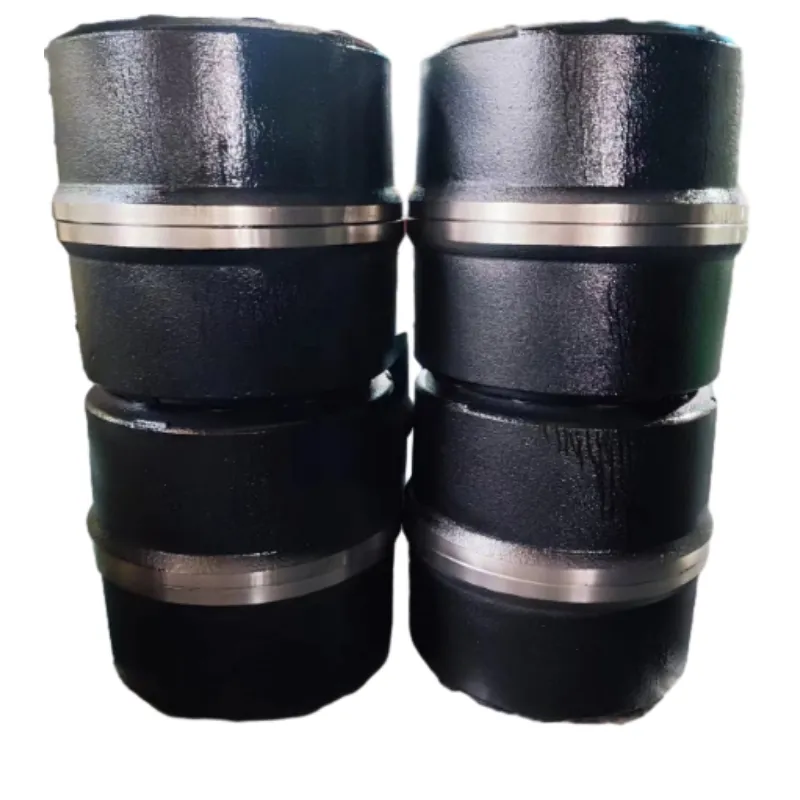
Why brake drums still matter
Drums offer high thermal mass, stable friction at moderate temperatures, and friendlier economics for fleets. Interestingly, EV makers are returning to rear brake drums to reduce corrosion and maintenance during light regenerative braking use. Many customers say they appreciate the sealed design that keeps dust and water at bay on rainy routes.
Manufacturing flow and testing (how the sausage is made)
- Materials: Gray cast iron (SAE J431 G3000 / EN-GJL-250), optimized with inoculation for graphite flake morphology.
- Foundry process: Controlled melt, sand casting, riser/feeder design for uniform wall thickness, followed by stress relief/annealing.
- Machining: CNC turning of braking surface, drum bore, stud holes; chamfering; dynamic balancing per ISO 21940.
- Quality checks: Hardness (HB 190–240), runout, imbalance (g·mm), thickness variation, ultrasonic or dye-penetrant crack inspection.
- Compliance: Processes aligned with IATF 16949/ISO 9001; replacement parts may be validated to ECE R90 where applicable.
- Service life: Around 120,000–300,000 km for light/medium trucks (real-world use may vary with duty cycle, lining, and cooling).
Product specifications (typical)
| Material | Gray Cast Iron HT250 / SAE J431 G3000 |
| Outer Diameter Range | ≈ 254–420 mm (custom options available) |
| Wall Thickness | Around 9–16 mm depending on application |
| Hardness | HB 190–240 (typical target) |
| Max Radial Runout | ≤ 0.06 mm (post-machining) |
| Dynamic Imbalance | ≤ 800 g·mm per ISO 21940 grade (model-dependent) |
| Testing | Inertia-dyno verification per ECE R90 (where applicable), crack and fade checks |
Quick test snapshot (internal sample, small batch): average runout 0.035 mm; imbalance 520 g·mm; no thermal cracking after 180 fade cycles. It’s decent, and—as always—real-world results hinge on lining material and cooling.
Applications and advantages
- Light/medium trucks, buses, trailers, agricultural machinery, off-highway axles.
- Pros: heat capacity, sealed friction path, predictable wear, cost-efficiency, easier shoe service for many fleets.
- Considerations: weight vs. discs, potential fade at extreme temps if cooling is insufficient.
Vendor comparison (what buyers typically weigh)
| Vendor | Material Grade | Certs | Balancing | Lead Time | Customization |
|---|---|---|---|---|---|
| Ningjin-area Foundry (Brake Drum) | HT250 / SAE G3000 | ISO 9001, IATF 16949 | ISO 21940, model-specific | ≈ 25–40 days | Bolt circle, stud, offset, logo |
| Importer A (generic) | Mixed (declared G3000) | ISO 9001 (varies) | Basic balance check | ≈ 45–60 days | Limited catalog SKUs |
| Local Foundry B | HT250 (traceable) | IATF 16949 (on request) | Documented to ISO 21940 | ≈ 20–35 days | High—small-batch tooling |
Customization notes
Spec your brake drums with precise bolt circle (PCD), pilot diameter, stud size, offset/backspace, braking surface width, and coating. Ask for PPAP documentation and heat-lot traceability if you supply OE or safety-critical fleets.
Mini case study
A regional delivery fleet in North China swapped to gray-iron brake drums with tighter runout control. Over 9 months, they reported roughly 18% fewer unscheduled brake services and more consistent shoe wear. Not scientific, but it tracks with balanced drums and good lining pairing.
Standards and references
Look for SAE J431 for material, ECE R90 for replacement part performance, ISO 21940 for balancing, and FMVSS 121 for air-brake system requirements on heavy vehicles. It seems dry, but it’s the difference between guesswork and confidence.
-
Understanding Drum Brakes on Cars A Complete Guide to ReliabilityNewsApr.16,2026
-
Understanding Drum Brakes on Car for Safety and PerformanceNewsApr.09,2026
-
Comprehensive Guide to Understanding Drum Brakes on a Semi TruckNewsApr.07,2026
-
Understanding the Mechanics and Maintenance of Drum Brakes on a CarNewsApr.04,2026
-
Understanding and Fixing Drum Brakes Not Self Adjusting for Vehicle SafetyNewsMar.31,2026
-
Understanding and Fixing Issues with Drum Brakes Not Releasing EffectivelyNewsMar.28,2026
-
Nissan Sentra Drum Brakes A Comprehensive Guide to Maintenance and ReplacementNewsMar.26,2026