

Brake Drums for Trucks – OEM Quality, Durable, Factory Price
Brake Drum: an insider’s look from foundry floor to fleet uptime
If you’re evaluating brake drums for trucks, buses, or trailers, here’s the short version: material quality and machining precision decide everything. I’ve walked the lines in Haozhuang, Tangqiu Town, Ningjin County, Xingtai, Hebei—where the foundries still smell like iron and cutting fluid—and the difference between a decent drum and a downtime disaster is not subtle.
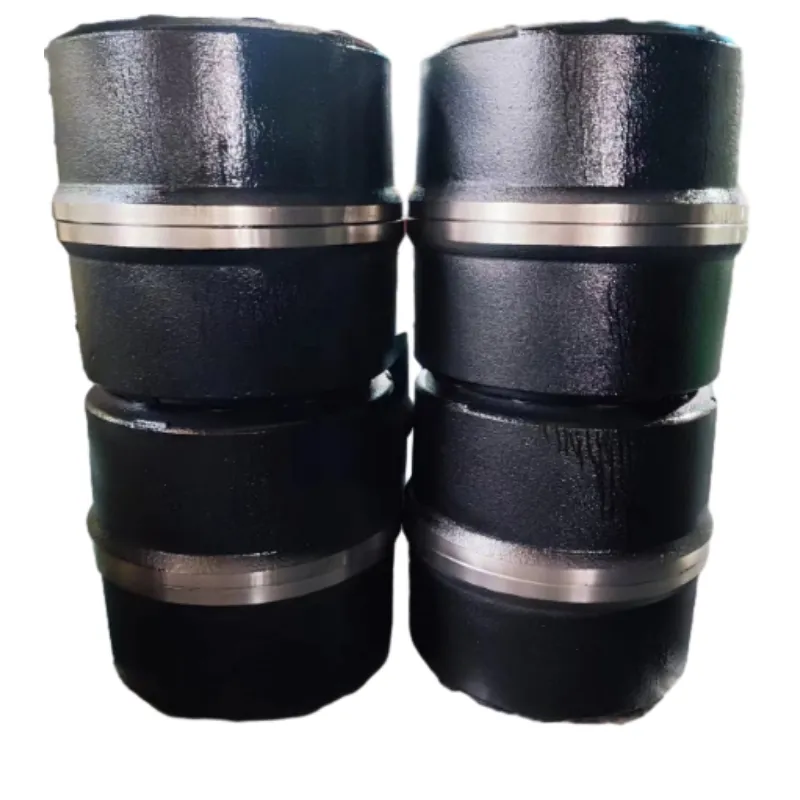
The Brake Drum from Ningchai uses gray cast iron (EN-GJL-250/HT250), that classic “hand drum” profile. Why drums still matter? Heat capacity and robust simplicity. Discs get the headlines; brake drums quietly move freight and people, day in, day out.
Where they’re used (and why buyers still pick them)
- Heavy trucks and trailers: long downhill grades, high mass, predictable maintenance cycles.
- City buses: repeat stop-start cycles; operators want durable, serviceable hardware.
- Off-highway/agriculture: dust, mud, and minimal service intervals—brake drums shrug it off.
- Light commercial retrofits: cost control and proven reliability.
Process flow (from melt to road)
- Materials: high-purity pig iron + returns; chemistry tuned to SAE J431 Grade G3000 window.
- Melting & inoculation: control for pearlitic matrix; graphite distribution for damping.
- Casting: optimized risers/gating to reduce porosity; sand control for surface finish.
- Stress relief: thermal normalization to reduce residual stress and heat checking.
- Machining: CNC turn/mill; hub pilot, shoe track, and bolt circle to tight tolerances.
- Balancing: ISO 1940-1 grade G16 (sometimes G40 for heavy spec); dynamic correction.
- Inspection & testing: hardness, runout, ultrasonic spot checks; dynamometer correlation.
Product specifications (typical, ≈ values; real-world use may vary)
| Material | Gray cast iron EN-GJL-250 (SAE J431 G3000) |
| Outer diameter | ≈ 410–420 mm (common heavy-duty pattern) |
| Shoe track width | ≈ 180–200 mm |
| Bolt circle / holes | ≈ 275–335 mm / 8–10 holes |
| Hub pilot | ≈ 220–281 mm |
| Hardness | 187–241 HBW (Brinell) |
| Max lateral runout | ≤ 0.08 mm |
| Surface roughness | Ra 3.2–6.3 μm (shoe track) |
| Balancing | ISO 1940-1 G16 (typical) |
| Service life | ≈ 150,000–300,000 km depending on route, load, and lining |
Testing, standards, and certifications
- Material: SAE J431 (gray iron); microstructure spot-checked under metallograph.
- Balancing: ISO 1940-1; Runout: ISO 1101/ANSI Y14.5 GD&T practice.
- Dynamometer references: FMVSS 121 (air-braked vehicles), ECE R13; replacement parts may align with ECE R90 where applicable.
- Quality systems: ISO 9001 and often IATF 16949 for automotive production.
- Internal test data (sample): thermal fatigue 300 cycles @ 450°C; hardness median 205 HBW; no macro-cracks observed post-dye-penetrant.
Vendor snapshot (field-notes style)
| Vendor | Lead time | Certs | Tolerances | Notes |
|---|---|---|---|---|
| Ningchai (Hebei) | ≈ 20–30 days | ISO 9001 / IATF 16949 | Runout ≤ 0.08 mm, G16 balance | Stable metallurgy; flexible customization |
| Generic import | ≈ 30–45 days | Varies | Runout ≈ 0.10–0.15 mm | Cost-first; QC consistency mixed |
| Local distributor | Stock-dependent | Distributor QC | Specs vary by batch | Fastest replacement; pricing higher |
Customization and practical tips
- Dimensions: OD, shoe width, bolt circle, pilot—match OE prints or provide samples.
- Balancing grade: specify G16 or G40 for severe-duty; ask for balance report.
- Surface finish: request Ra spec on shoe track; rougher surfaces can eat linings.
- Branding and traceability: casting marks, heat codes for warranty tracking.
Case study: intercity coach fleet (North China)
A 60-bus operator swapped to Ningchai brake drums on rear axles. Over 12 months, average drum life rose from ≈180k km to ≈245k km; lining wear dropped ~11%. The surprise? Drivers reported steadier pedal feel on long descents—likely the stress-relief and better balance working together. It’s not a lab white paper, but the maintenance ledger rarely lies.
Bottom line: if you’re chasing fewer roadside calls and longer lining intervals, focus on metallurgy, runout, and balance. The rest—price, coatings, paint codes—is window dressing.
Origin
Haozhuang, Tangqiu Town, Ningjin County, Xingtai, Hebei Province, China. A place that knows iron—and, to be honest, knows how to make it behave.
References
- SAE J431: Automotive Gray Iron Castings.
- ISO 1940-1: Mechanical vibration—Balance quality requirements for rotors.
- FMVSS 121 and ECE R13/R90 brake performance frameworks for heavy vehicles.
-
Understanding Drum Brakes on Cars A Complete Guide to ReliabilityNewsApr.16,2026
-
Understanding Drum Brakes on Car for Safety and PerformanceNewsApr.09,2026
-
Comprehensive Guide to Understanding Drum Brakes on a Semi TruckNewsApr.07,2026
-
Understanding the Mechanics and Maintenance of Drum Brakes on a CarNewsApr.04,2026
-
Understanding and Fixing Drum Brakes Not Self Adjusting for Vehicle SafetyNewsMar.31,2026
-
Understanding and Fixing Issues with Drum Brakes Not Releasing EffectivelyNewsMar.28,2026
-
Nissan Sentra Drum Brakes A Comprehensive Guide to Maintenance and ReplacementNewsMar.26,2026