

Brake Drums for Trucks - Durable, OEM-Grade Performance
Brake Drum: insider notes on materials, testing, and what actually matters
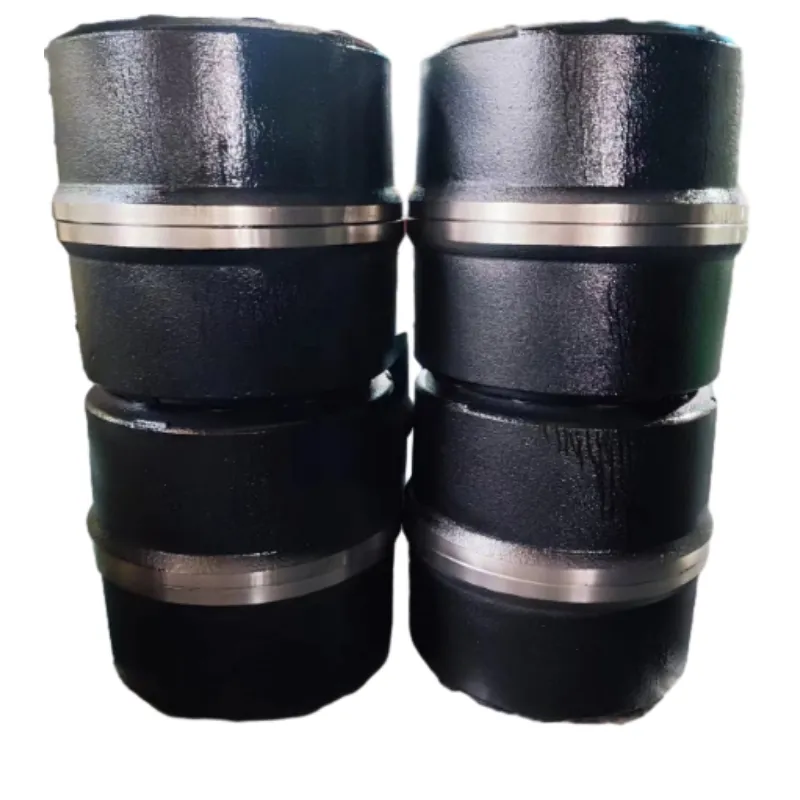
If you’ve ever wondered why brake drums still dominate heavy trucks and trailers, you’re not alone. In fact, despite the hype around discs, fleets keep telling me drums are tougher in dirty, off‑highway conditions and more forgiving on maintenance budgets. The model here is a classic made of delicate (but robust) gray cast iron, that hand‑drum silhouette you know, poured and machined in Haozhuang, Tangqiu Town, Ningjin County, Xingtai, Hebei, China.
Industry trends (quick take)
- High-silicon gray iron (SAE G3000/HT250 class) remains standard; a few suppliers flirt with alloyed iron (Mo/Cr) for heat fade resistance.
- Lighter drums are emerging, but fleets I spoke with still prioritize crack resistance over a few kilos saved.
- Regulatory pull: FMVSS 121 and ECE R13 verification is increasingly requested on replacement parts—makes sense, given liability concerns.
Core specs you’ll actually use
| Material | Gray cast iron ≈ SAE J431 G3000 / ASTM A48 Class 35B (HT250 in GB/T 9439) |
| Outer Diameter | ≈ 280–420 mm (common heavy-duty sizes; real-world use may vary) |
| Braking Surface Hardness | HB 180–240 |
| Runout (TIR) | ≤ 0.08 mm after machining |
| Balance | Residual unbalance ≤ 30 g·mm; balance grade around G40 |
| Expected Service Life | ≈ 150,000–300,000 km (heavy trucks), depending on load/topography/linings |
How it’s made (short, real-world process flow)
- Materials: pig iron + low‑phosphorus scrap, alloyed with Si/Mn (optionally Mo/Cr for heat stability).
- Melting & pouring: medium‑frequency induction, ≈ 1350–1450°C; resin sand molds for dimensional repeatability.
- Heat control: slow cooling to control pearlite/graphite flake distribution (yes, this affects squeal and wear).
- CNC machining: critical surfaces, pilot/bolt circle, followed by chamfering and deburring.
- Finishing: shot blasting, anti‑corrosion coating; dynamic balancing.
- Testing: hardness mapping, runout check, microstructure exam, magnetic particle for surface cracks, occasional X‑ray sampling.
Vendor comparison (what buyers keep asking me)
| Vendor | Casting Grade | Machining Tolerance | Certifications | Lead Time | Customization |
|---|---|---|---|---|---|
| Ningchai (Hebei, China) | SAE G3000 / HT250 | IT7–IT8, TIR ≤ 0.08 mm | ISO 9001, IATF 16949 (supplier-level), FMVSS/ECE test reports | ≈ 20–35 days | Bolt circle, pilot, studs, logo, paint |
| Generic importer | Mixed (declared G3000) | IT8–IT9 | ISO 9001 (varies) | 30–60 days | Limited |
| OEM brand | G3000 with tighter chemistry | IT7, TIR ≤ 0.05 mm | IATF 16949, OEM PPAP | Stock or 10–20 days | Full engineering support |
Applications, feedback, and a quick case
Where they shine: heavy trucks, buses, trailers, ag machinery, and off‑road equipment. Many customers say brake drums tolerate dust and heat cycles better during long downgrades. One Hebei logistics fleet swapped to these brake drums on 6×4 tractors; after ≈ 220,000 km, wear was still within reline limits, with measured runout drift under 0.04 mm. Not a lab miracle—just decent metallurgy and machining.
Testing standards and compliance (what to ask for)
- Material: SAE J431 or ASTM A48 conformity; GB/T 9439 for local audits.
- Performance: dynamometer to fleet duty cycles, fade/recovery, crack inspection; FMVSS 121 (air brake systems) or ECE R13 compliance evidence for the axle/brake system.
- Quality system: IATF 16949 and ISO 9001. Optional: PPAP level 3 for OEM‑style validation.
Customization: bore/pilot, PCD, stud pattern, offset, friction surface finish (Ra), protective paint, private label. Real talk—confirm drawing revs and CMM reports before you pull the trigger.
Origin note: Produced in Haozhuang, Tangqiu Town, Ningjin County, Xingtai, Hebei Province, China.
Bottom line
Good brake drums aren’t flashy, but the right iron, tight runout, and honest testing make all the difference. Ask for the data—then let the miles do the talking.
Authoritative citations
- SAE J431: Automotive Gray Iron Castings. SAE International. https://www.sae.org
- ASTM A48/A48M: Standard Specification for Gray Iron Castings. ASTM International. https://www.astm.org
- GB/T 9439: Grey Iron Castings (China National Standard). http://www.gbstandards.org
- FMVSS 121: Air Brake Systems (NHTSA). https://www.ecfr.gov/current/title-49/subtitle-B/chapter-V/part-571/section-571.121
- ECE Regulation No. 13: Braking of M/N/O categories. UNECE. https://unece.org
- IATF 16949: Automotive Quality Management System. https://www.iatfglobaloversight.org
-
Understanding Drum Brakes on Cars A Complete Guide to ReliabilityNewsApr.16,2026
-
Understanding Drum Brakes on Car for Safety and PerformanceNewsApr.09,2026
-
Comprehensive Guide to Understanding Drum Brakes on a Semi TruckNewsApr.07,2026
-
Understanding the Mechanics and Maintenance of Drum Brakes on a CarNewsApr.04,2026
-
Understanding and Fixing Drum Brakes Not Self Adjusting for Vehicle SafetyNewsMar.31,2026
-
Understanding and Fixing Issues with Drum Brakes Not Releasing EffectivelyNewsMar.28,2026
-
Nissan Sentra Drum Brakes A Comprehensive Guide to Maintenance and ReplacementNewsMar.26,2026