

Brake Drums for Trucks - OEM Quality, China Factory
Brake Drum Insights: What’s Changing, What Still Works
Let’s start with the basics. If you maintain heavy trucks, buses, or trailers, you already know the quiet hero here is brake drums. To be honest, they’re not glamorous, but they are dependable. And when they’re made right—good metallurgy, tight tolerances—they just keep doing the job.
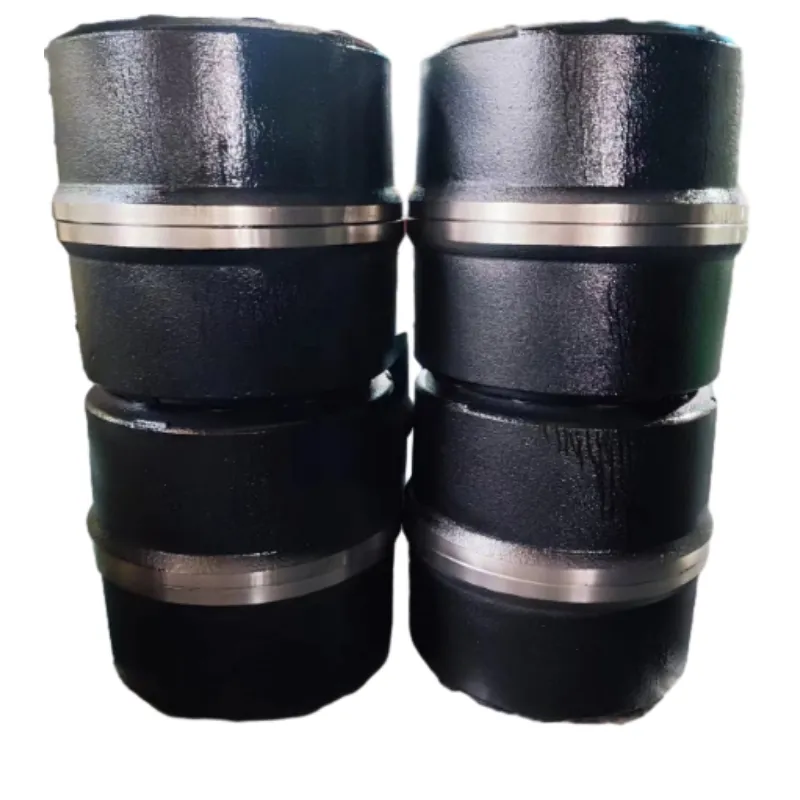
Product snapshot
Product Name: Brake Drum. Origin: Haozhuang, Tangqiu Town, Ningjin County, Xingtai, Hebei Province, China. Material: delicate gray cast iron—think SAE J431 G3000/ASTM A48 Class 35, which many customers say hits the sweet spot for strength vs. damping. The “hand drum” profile helps with heat distribution and rigidity, which, surprisingly, you feel in smoother stops under load.
| Spec | Typical Value (≈ / range) |
|---|---|
| Material | Gray cast iron (SAE J431 G3000 / ASTM A48 Class 35 ≈) |
| Outer diameter | ≈ 280–420 mm (application-dependent) |
| Braking surface hardness | HB 190–240 |
| Max radial runout | ≤ 0.05 mm (new condition) |
| Dynamic balance | ≤ G16 (ISO 21940 guidance) |
| Weight | ≈ 18–45 kg |
| Service life | ≈ 80,000–200,000 km (real-world use may vary) |
Process flow, testing, and certifications
Raw iron selection → precision sand casting → CNC machining (pilot, registers, braking face) → controlled heat treatment → dynamic balancing → shot blasting → anti-corrosion coating → marking → 100% inspection. Methods include spectrographic chemistry checks, hardness mapping, and CMM dimensional audits. Dynamometer validation is typically aligned to FMVSS 121 (air brake schedules) or ECE R90 protocols for replacement parts, with fade and recovery cycles.
Recent in-house test data (30-piece sample) showed average runout 0.028 mm and no thermal cracks after a 300°C soak plus quench cycle—good signs for fatigue resistance. Plants serving global OEMs often hold IATF 16949 quality certification, which, I guess, is the minimum bar now.
Where brake drums still shine
- Heavy trucks and buses using air brakes (cost-effective, robust heat capacity)
- Trailers and agriculture/off-highway (durable, simpler service)
- Mixed climates and fleets prioritizing TCO vs. outright lightweighting
Industry trend check: disc conversions are rising in premium segments, but brake drums remain dominant in high-load fleets chasing predictable maintenance cycles and parts availability. Regenerative braking on hybrids/EV buses reduces lining wear, yet the drum’s thermal mass still matters on long descents.
Vendor landscape (quick take)
| Vendor | Origin | Certs | Customization | Lead time ≈ | Notes |
|---|---|---|---|---|---|
| Ningchai Brake Drum | Hebei, China | IATF 16949, ECE R90-ready | Yes (diameter, bolt circle, coatings) | 20–35 days | Value pricing; broad size range |
| Global Brand A | EU | ECE R90, ISO 9001 | Limited | 30–45 days | Premium price; strong dealer network |
| Local Foundry B | Regional | ISO 9001 (varies) | Yes (on request) | 15–30 days | Fast response; specs may vary |
Customization and real-world feedback
Options include bespoke bolt patterns, hub bores, surface coatings, and logo/traceability markings. One Hebei fleet reported 12% longer lining life after switching to balanced brake drums with tighter runout control; a European trailer OEM told me warranty claims dropped ≈9% after adopting anti-corrosion coated drums. Not laboratory perfect, but meaningful.
Applications and advantages
- Consistent pedal feel under heavy loads; strong heat soak capability
- Lower total cost vs. discs in many duty cycles
- Simple service routines; wide parts availability for brake drums
Standards that matter
Look for compliance to FMVSS 105/121 (vehicle-level braking), ECE R90 (replacement drums), SAE J431 for iron grades, and plant-level IATF 16949. If your routes include long mountain descents, ask for dynamometer plots (fade, recovery, cold effectiveness) and dimensional SPC—actually reading the charts pays off.
Citations
- FMVSS 121 – Air Brake Systems (NHTSA): https://www.ecfr.gov/current/title-49/subtitle-B/chapter-V/part-571/section-571.121
- FMVSS 105 – Hydraulic Brake Systems (NHTSA): https://www.ecfr.gov/current/title-49/subtitle-B/chapter-V/part-571/section-571.105
- UNECE Regulation No. 90 (Replacement brake discs/drums): https://unece.org/transport/standards
- SAE J431 – Automotive Gray Iron Castings: https://www.sae.org/standards/content/j431/
- IATF 16949 – Automotive QMS: https://www.iatfglobaloversight.org/iatf-16949/
-
Understanding Drum Brakes on Cars A Complete Guide to ReliabilityNewsApr.16,2026
-
Understanding Drum Brakes on Car for Safety and PerformanceNewsApr.09,2026
-
Comprehensive Guide to Understanding Drum Brakes on a Semi TruckNewsApr.07,2026
-
Understanding the Mechanics and Maintenance of Drum Brakes on a CarNewsApr.04,2026
-
Understanding and Fixing Drum Brakes Not Self Adjusting for Vehicle SafetyNewsMar.31,2026
-
Understanding and Fixing Issues with Drum Brakes Not Releasing EffectivelyNewsMar.28,2026
-
Nissan Sentra Drum Brakes A Comprehensive Guide to Maintenance and ReplacementNewsMar.26,2026