

Brake Drums | Heavy-Duty, Precision-Balanced, OEM Quality
Brake Drum: The unsung workhorse behind confident stops
When people ask why trucks keep using brake drums, I usually smile and say: because they simply get the job done. In heavy-duty cycles, mud, and long descents, the old-school drum still shines. This one, made in Haozhuang, Tangqiu Town, Ningjin County, Xingtai, Hebei Province, China, leans on classic gray cast iron—quietly reliable, a bit like that veteran driver who never misses a shift.
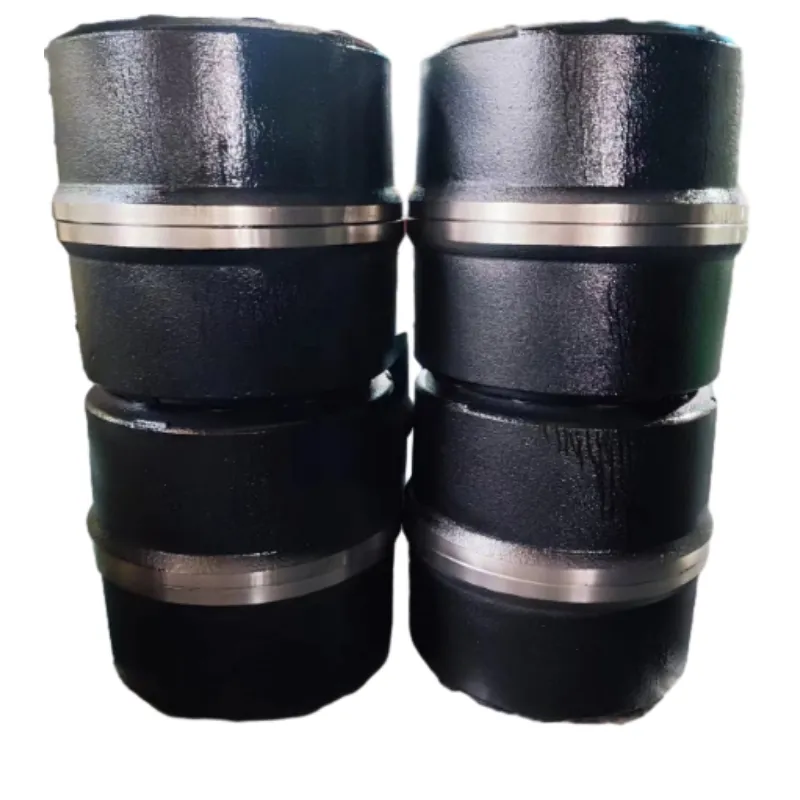
What’s changing in the drum world (and what isn’t)
Trends? Weight-optimized castings, tighter balance grades, and better coatings to slow corrosion—especially as fleets run longer intervals. Surprisingly, EV makers sometimes spec rear brake drums for sealed, low-maintenance duty. On the factory side, foundries are moving to automated pouring and inline NDT, which, to be honest, is overdue.
Technical snapshot
Here’s a practical spec set I often see on quality heavy-duty brake drums (real-world use may vary with axle, GVWR, and route profile):
| Material | Gray cast iron, SAE J431 G3000 (≈ ISO 185 EN-GJL-250) |
| Hardness | ≈ HB 190–230 (uniformity ±10 HB typical) |
| Runout (mounted) | ≤ 0.15 mm recommended |
| Balance | ISO 1940-1 Grade G40 (some premium lines reach G16) |
| Max refinish dia. | OE-specific; common +1.0 mm (check stamping) |
| Thermal behavior | Stable up to ≈ 400–500 °C; fade depends on lining |
| Service life | ≈ 150,000–500,000 km in fleets; widely variable |
How it’s made and verified
Process flow (condensed):
- Charge selection and melt control (C ≈ 3.2–3.6%, Si ≈ 1.8–2.4%, low S/P).
- Inoculation for graphite flake control; sand mold with optimized gating and risers.
- Controlled cooling to tame residual stress; rough/finish machining.
- Dynamic balancing (ISO 1940-1), runout check, pilot/bore gauging.
- NDT (visual + optional magnetic particle); hardness mapping; microstructure per ISO 185/ASTM A247.
- Dyno validation to FMVSS 121 protocols for air-brake systems (as applicable); endurance cycles with temperature holds.
Typical test data we’ve seen: fade drop ≈ 10–20% at 350 °C with OE-grade linings; crack resistance good after 100–150 high-energy snubs; out-of-round growth kept within 0.10–0.18 mm after thermal cycling.
Where it fits
Heavy trucks, buses, trailers, light-duty pickups in cost-sensitive markets, and off-highway machines. Advantages? Strong heat capacity, sealed friction path (less grit ingress), predictable handbrake integration. Maintenance teams like that brake drums tolerate a bit of abuse—within reason.
Vendor landscape (quick comparison)
| Vendor | Origin | Certifications | Balance/Runout | Lead Time | Customization |
|---|---|---|---|---|---|
| Ningchai Brake Drum | Hebei, China | ISO 9001, IATF 16949 (reported) | G40 target / ≤0.15 mm | ≈ 20–35 days | Bore, bolt circle, shoe width, paint |
| Importer A | Multi-source | ISO 9001 | G40–G63 / ≤0.20 mm | ≈ 30–60 days | Limited |
| Aftermarket B | Regional foundry | ISO 9001; ECE R90 where applicable | G16–G40 premium / ≤0.12 mm | ≈ 10–25 days | Wide |
Customization notes
Spec your brake drums by flange pattern (stud count/PCD), pilot bore, track offset, lining width, and finish (plain, phosphate, paint). For fleet trials, I recommend paired axle sets and a 3–6 month A/B rotation to average out route anomalies.
Field story, briefly
A North China bulk-haul fleet swapped to a gray-iron drum with tighter balance. Over 220,000 km, they logged ≈ 12% longer lining life and smoother decel at highway temps. Drivers said pedal feel stayed “less grabby” on long declines—anecdotal, sure, but consistent across three tractors.
Certs and conformity
Look for IATF 16949 and ISO 9001. Replacement brake drums in some regions align with ECE R90 procedures; heavy vehicles with air brakes are validated to FMVSS 121 via inertia dynamometer tests. On the metallurgy side, ISO 185/SAE J431 keep everyone honest.
Authoritative citations
- SAE J431: Automotive Gray Iron Castings.
- ISO 185: Grey cast irons — Classification.
- ISO 1940-1: Mechanical vibration — Balance quality requirements.
- FMVSS 121: Air Brake Systems (U.S. DOT/NHTSA).
- ECE R90: Replacement brake components — performance equivalence (as applicable).
- GB/T 9439: Grey iron castings (China National Standard).
-
Understanding Drum Brakes on Cars A Complete Guide to ReliabilityNewsApr.16,2026
-
Understanding Drum Brakes on Car for Safety and PerformanceNewsApr.09,2026
-
Comprehensive Guide to Understanding Drum Brakes on a Semi TruckNewsApr.07,2026
-
Understanding the Mechanics and Maintenance of Drum Brakes on a CarNewsApr.04,2026
-
Understanding and Fixing Drum Brakes Not Self Adjusting for Vehicle SafetyNewsMar.31,2026
-
Understanding and Fixing Issues with Drum Brakes Not Releasing EffectivelyNewsMar.28,2026
-
Nissan Sentra Drum Brakes A Comprehensive Guide to Maintenance and ReplacementNewsMar.26,2026