Selecting a high-performance braking component often comes down to the precision of the interface between the hub and the drum. In heavy-duty automotive engineering, the efficiency of heat dissipation and the stability of friction contact determine not only the longevity of the vehicle but the immediate safety of every journey.
The technical challenge lies in balancing structural rigidity with weight optimization, especially when dealing with diverse axle loads and varying braking frequencies. Whether it is for a luxury coach or a commercial freight vehicle, the hub drum must withstand extreme thermal cycling without mechanical deformation.
To achieve these rigorous standards, sourcing from a specialized customized brake hub drum gear coupling factory allows engineers to align component specifications with the exact operational demands of their fleet, ensuring consistent braking torque and reduced maintenance intervals.


The primary function of a brake drum is to convert kinetic energy into thermal energy through friction. When oil pressure pushes the brake shoe against the inner edge, the resulting friction halts the tire's rotation. This process generates immense heat, which must be dissipated quickly to prevent "brake fade"—a condition where the friction coefficient drops, leading to increased pedal force and reduced stopping power.
Effective thermal management is achieved through precise wall thickness and the strategic placement of reinforcement ribs. These features increase the surface area for cooling and ensure the drum maintains its circularity under extreme temperatures, preventing vibration and noise.
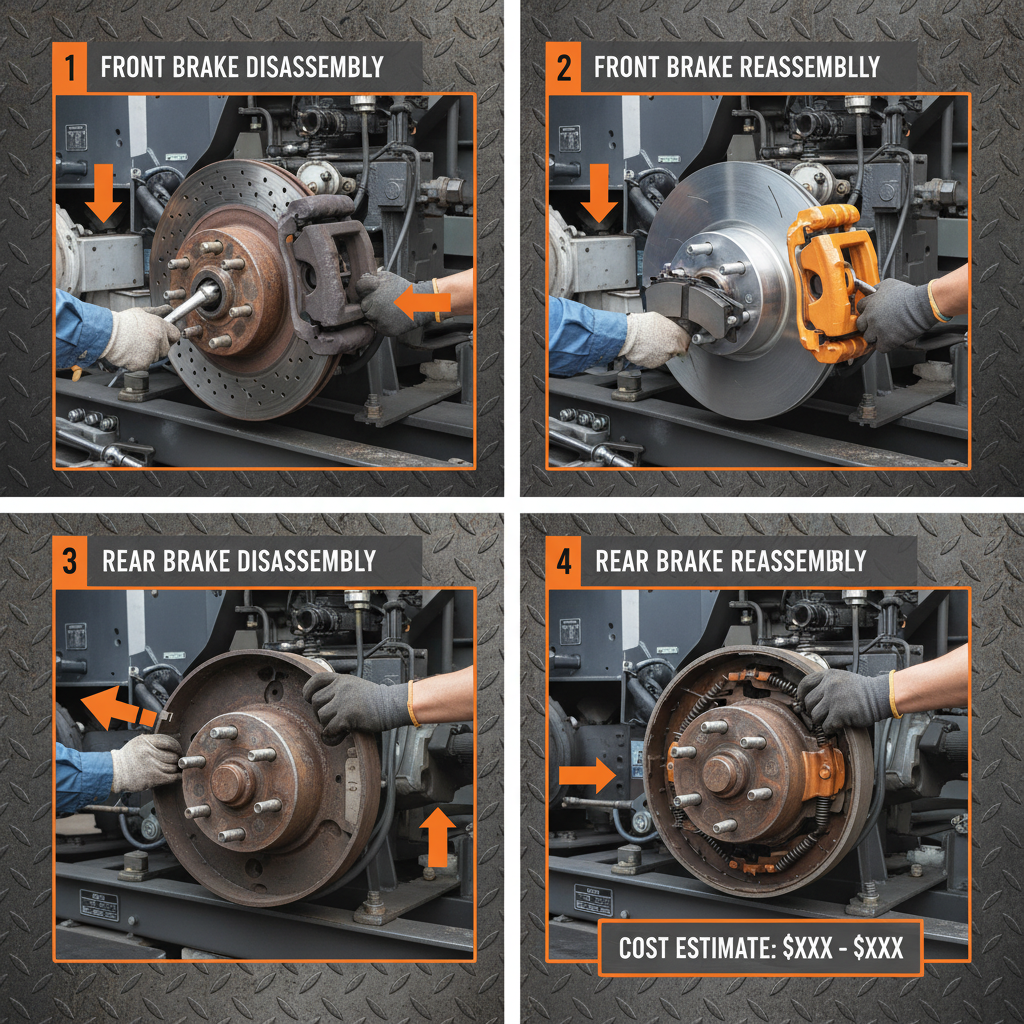
A complete drum braking assembly is an ecosystem of interacting parts. The brake drum acts as the rotating friction partner, while the brake base plate, brake cylinder, and brake shoes form the stationary actuating system. The gear coupling ensures that the rotation is transferred flawlessly from the axle to the drum, maintaining a precise concentric relationship.
Design logic focuses heavily on the "friction pair" relationship. The inner diameter must be perfectly smooth and consistent to ensure uniform contact with the brake shoes. Any deviation in the surface finish or a slight ovality in the casting can lead to uneven wear and an unstable braking feel for the operator.
Engineering priorities typically follow a hierarchy: safety (stopping distance) first, followed by durability (wear resistance), and finally efficiency (weight reduction). This is why high-strength cast iron remains the industry standard for heavy-duty applications, offering the necessary heat capacity to handle repeated emergency stops.
The choice of material directly influences the brake drum's rigidity and its ability to resist thermal deformation. While cast iron is the most common due to its excellent heat absorption, modern requirements often necessitate hybrid constructions to optimize the strength-to-weight ratio.
The optimal brake drum is not merely the strongest, but the one that achieves the most stable thermal equilibrium between the friction surface and the surrounding atmosphere to prevent mechanical warping.
Different vehicle types require different material classifications. Integral casting drums are used for maximum strength, while combined drums—incorporating steel plates or light alloys with cast iron—are employed to reduce unsprung weight without sacrificing the critical friction properties of the inner lining.
When evaluating different drum designs, manufacturers analyze several key indices: heat dissipation rate, wear uniformity, structural rigidity, and total mass. An integral casting typically offers the highest rigidity but may be heavier than combined alloy versions.
By comparing these factors, fleet operators can determine whether a light alloy combined drum is suitable for their specific duty cycle or if the extreme loads of heavy hauling require the robustness of a full cast-iron integral drum.
In a typical industrial setting, such as a logistics hub operating heavy-duty Mercedes Benz or Volvo trucks, the brake drum is subjected to constant stop-and-go stress. The most common failure modes include mechanical deformation due to overheating and poor contact between the shoe and drum, which leads to increased pedal force and audible noise.
Regular inspection is the only way to identify early-stage cracks or surface scoring. Neglecting these signs often leads to vibration and reduced braking efficiency, compromising road safety. Trusting in a high-quality customized brake hub drum gear coupling factory ensures that replacement parts meet original equipment manufacturer (OEM) standards for fit and function.
The industry is moving toward "intelligent" thermal management, where the geometry of the drum is optimized using computational fluid dynamics (CFD) to maximize airflow. This reduces the reliance on purely heavy materials and allows for thinner walls without losing structural integrity.
Another significant shift is the integration of more advanced alloys that provide better heat capacity. This is particularly important for electric heavy-duty vehicles, where the braking system must complement regenerative braking while still providing full stopping power in emergency scenarios.
Furthermore, the demand for customized components is rising. As vehicle roles become more specialized—from urban delivery to long-haul arctic transport—the "one size fits all" approach is being replaced by tailored specifications that match the specific environmental and load conditions of the user.
When selecting a partner for automotive castings, the quality of the production facility is the primary indicator of product reliability. Advanced equipment, such as CNC vertical lathes and automated paint lines, ensures that the dimensional tolerances are kept within microns.
Quality control must go beyond visual inspection. The use of spectrometers and hardness testers allows the factory to verify the metallurgical composition of each batch, ensuring that the brake drum can withstand the required stress levels without fracturing.
A comprehensive capability assessment should also consider the factory's ability to provide a wide range of models. For example, Hebei Ningchai Machinery Co., Ltd. manages nearly 400 models catering to diverse brands, demonstrating the scalability and technical flexibility required for global supply chains.
| Evaluation Factor | Integral Casting | Combined Alloy | Standard Cast Iron |
|---|---|---|---|
| Thermal Stability | Very High | High | Moderate |
| Weight Efficiency | Low | Very High | Moderate |
| Wear Resistance | Extreme | High | High |
| Production Cost | Moderate | High | Low |
| Application Suitability | Heavy Haulage | Light Commercial | General Transit |
| Maintenance Cycle | Long | Moderate | Standard |
The quality is defined by the consistency of the internal surface finish and the material's ability to maintain its shape under high heat. A high-quality friction pair ensures that the brake shoes make full, uniform contact with the drum, preventing "hot spots" that can lead to warping and inconsistent braking torque.
The choice depends on the vehicle's load and operating environment. Integral castings are preferred for maximum durability and thermal mass in heavy-duty trucking. Combined alloy drums are ideal for vehicles where reducing unsprung weight is critical for fuel efficiency and handling, provided the thermal loads are within the alloy's limits.
Key indicators include an increase in pedal travel, audible squealing or grinding noises during braking, and physical signs of scoring or deep grooves on the inner surface. In severe cases, a "pulsing" feeling in the brake pedal may indicate that the drum has become oval or warped due to excessive heat.
Yes, because customization allows the component to be engineered for specific axle loads and terrain. A drum designed for mountainous terrain will have different reinforcement ribs and wall thicknesses than one designed for flat highway cruising, reducing the risk of thermal failure and improving overall stopping reliability.
The gear coupling is critical for ensuring that the hub rotates perfectly concentrically with the axle. Any misalignment at the coupling level will manifest as vibration at the drum, which causes uneven wear on the brake shoes and reduces the effective life of the entire braking system.
This certification ensures that the manufacturer follows a strict quality management system specifically designed for the automotive industry. It guarantees that every part, from the raw smelting process to the final CNC machining, is tracked and tested for consistency, reducing the likelihood of catastrophic part failure on the road.
The brake drum remains a cornerstone of vehicle safety, serving as the final barrier between motion and a complete stop. As automotive demands evolve toward heavier loads and higher efficiency, the precision of the manufacturing process becomes the deciding factor in component longevity.
By prioritizing metallurgical quality and precision machining, operators can significantly reduce downtime and ensure a safer environment for drivers and pedestrians alike. Investing in components from a verified customized brake hub drum gear coupling factory is not just a maintenance choice, but a commitment to operational excellence.