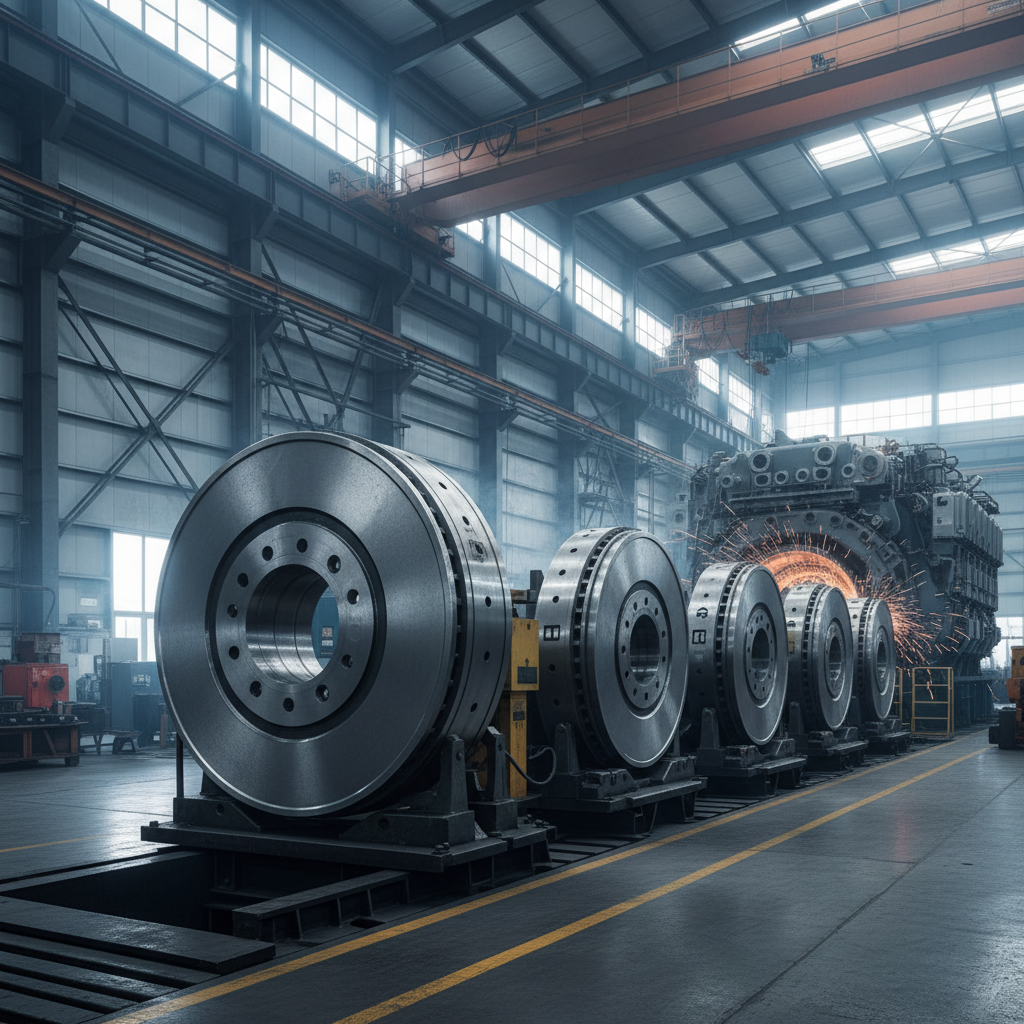
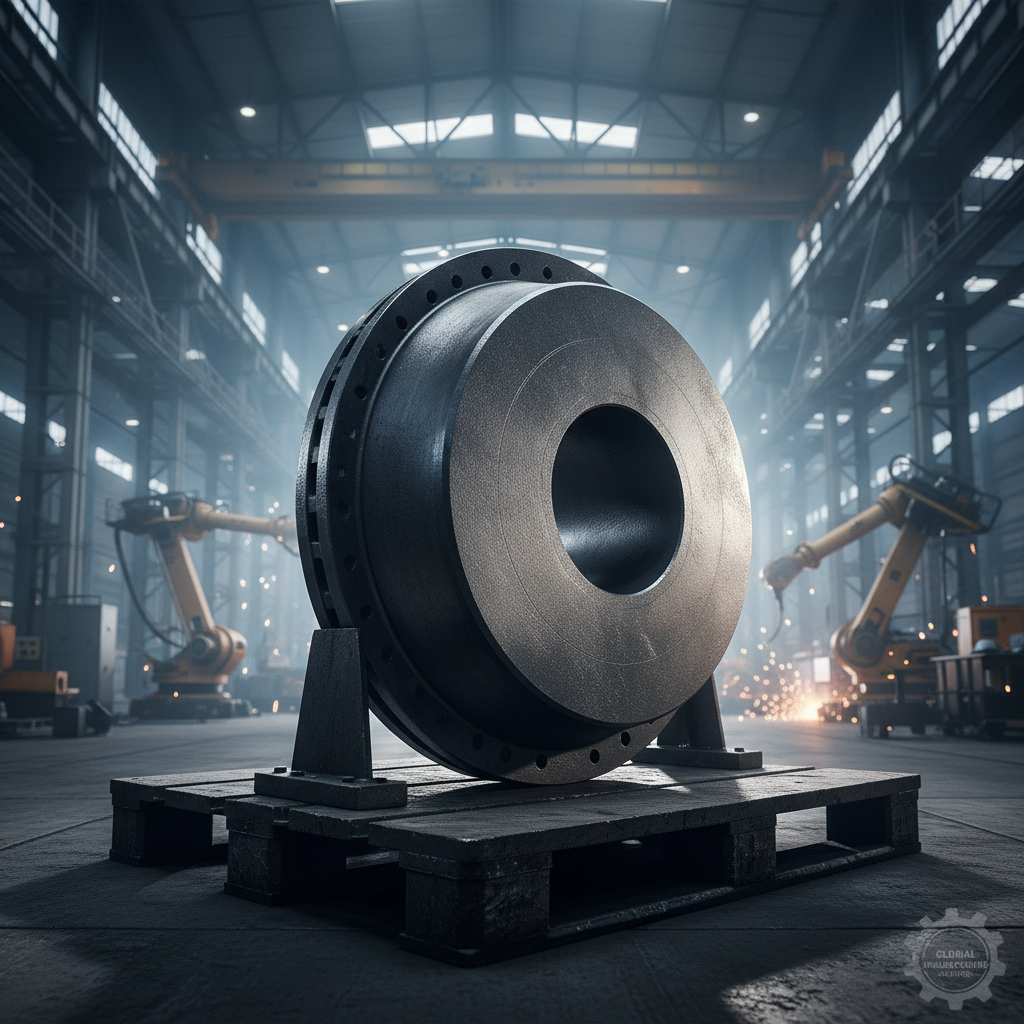
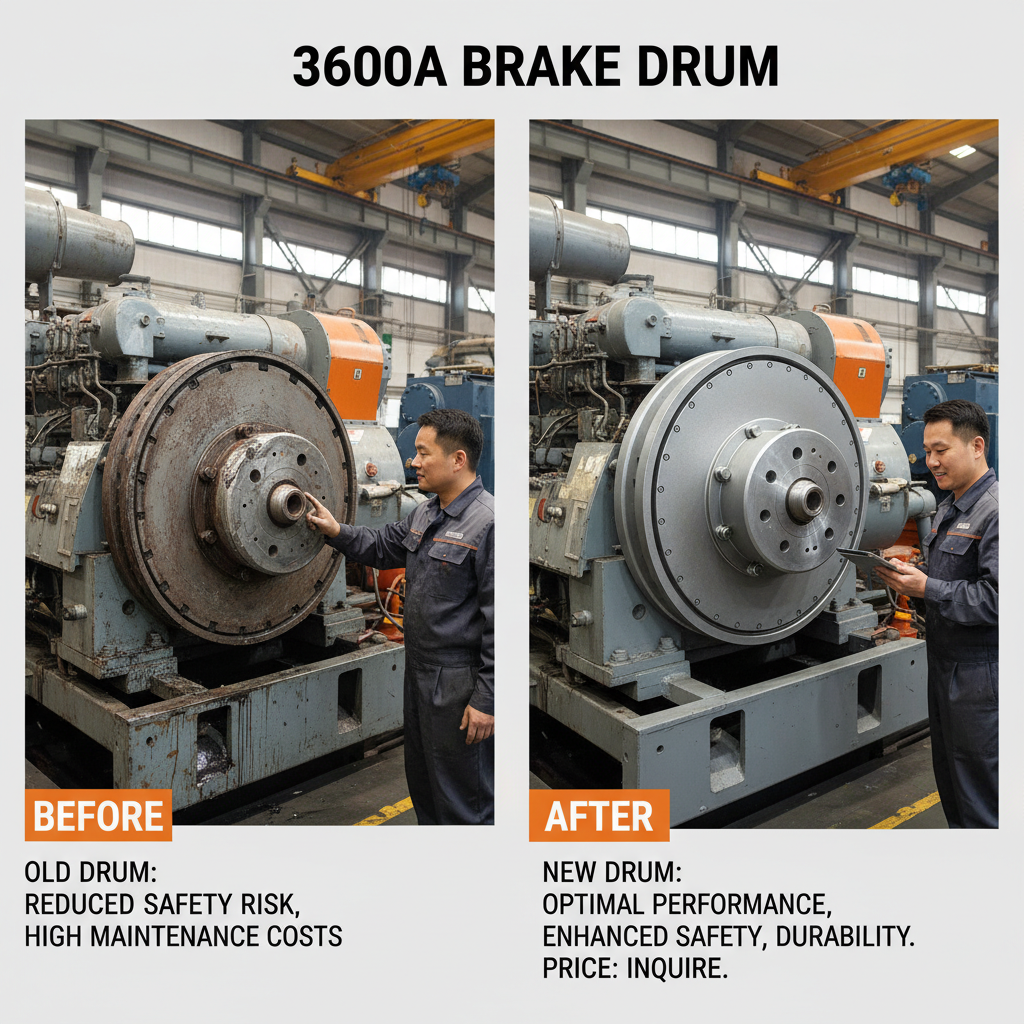
To be honest, the brake drum manufacturer scene has been wild lately. Everyone’s chasing lighter materials, you know? Carbon ceramic’s all the rage, but the cost…whew. I’ve been seeing a lot more requests for drums that can handle electric vehicles, too. The weight and torque are just different. It throws everything you thought you knew about heat dissipation out the window. You spend enough time on sites, you see these trends play out in real time, not just in industry reports.
Have you noticed how many designs try to get too clever? Like, they’ll add a bunch of cooling fins that look good on paper, but just trap dirt and debris on a job site. I encountered this at a factory in Ningbo last time, a real mess. The engineers were so proud of the airflow calculations, but they hadn’t thought about the actual environment. It’s always the little things that trip you up.
We mostly work with cast iron, still. It’s a workhorse, plain and simple. You can smell it when it's freshly cast, that metallic tang… feels solid in your hands. Some of the higher-end stuff, we’re using alloyed iron with molybdenum and nickel for extra strength. It's a little harder to machine, but worth it when you need that extra durability. We get a lot of requests for composite materials as well, but let me tell you, getting consistent quality is a headache.
The Current Landscape of Brake Drum Manufacturing
Anyway, I think the biggest change is the push for reducing weight. Fuel efficiency, you know? It’s driving demand for lighter alloys and composite materials. Strangely, though, sometimes lighter isn't better. You need that thermal mass to absorb the heat, especially in heavy-duty applications. We’ve been getting more requests for drums that can withstand continuous, hard braking, like in mining equipment. That requires a different approach altogether.
It’s not just about the materials either; it’s the manufacturing processes. Precision casting is key, and everyone’s trying to optimize that. The tolerances are getting tighter and tighter. And, of course, everyone wants faster turnaround times. The supply chain is…well, you know how it is.
Common Design Pitfalls in Brake Drums
The cooling fin thing, I mentioned that, right? That’s a big one. Another is over-engineering. You see designs that are ridiculously robust, but they add unnecessary weight and cost. It’s all about finding the right balance. And don't even get me started on designs that make servicing difficult. You need to be able to get those drums on and off without a three-hour struggle. Mechanics aren’t going to thank you for fancy designs if they can't easily maintain them.
Too much emphasis on aesthetics, too. Looks aren't everything, especially when it comes to something that’s going to be covered in brake dust and grime. I've seen drums where the designers prioritized the visual appeal over practical considerations – and it always ends badly.
And there's the issue of vibration. If the drum isn’t properly balanced, you get resonance, and that can lead to premature failure. It's a subtle thing, but it can be a real problem.
Material Selection and Handling
Cast iron, as I said, is still king for a lot of applications. It’s cheap, readily available, and has good thermal properties. But you have to be careful with the quality of the iron. You get what you pay for, you know? Some suppliers will try to sneak in lower-grade material. We do a lot of our own testing to ensure we’re getting the right stuff.
When we’re working with alloyed iron, it's a different ballgame. The melting and casting process is more complex, and you need specialized equipment. And the dust... that stuff gets everywhere. You gotta wear a proper respirator, trust me. We had a guy who didn’t, and he ended up with a lung condition. Not worth it.
And composites…well, they’re tricky. You have to control the resin content and the fiber orientation very carefully. And the bonding between the matrix and the fibers is critical. If it delaminates, you're in trouble. It's a lot more science than people realize.
Real-World Testing and Validation
Lab tests are fine, but they don’t tell the whole story. You need to see how these drums perform in the real world. We do a lot of field testing, putting them on trucks, buses, and industrial equipment. We monitor the temperature, the wear rate, and the braking performance. It's messy, time-consuming, but essential.
We also have a dyno where we can simulate different braking scenarios. We can subject the drums to continuous braking, hard braking, and everything in between. It helps us identify potential weaknesses and fine-tune the design. We’ve blown up a few drums on that dyno, let me tell you. But that’s how you learn.
Brake Drum Performance Metrics
Actual User Application Scenarios
It's interesting how people actually use these things. You design a drum for a certain application, but then you find out it's being used in something completely different. I once designed a drum for a heavy-duty truck, and it ended up being used on a drag racing car. They needed something that could withstand extreme temperatures and stresses. It worked surprisingly well.
Another time, we had a customer who was using our drums on a conveyor system in a coal mine. The environment was incredibly harsh, with a lot of dust and abrasive particles. We had to modify the design to protect against corrosion and wear. It was a challenging project, but we got it done.
Advantages and Disadvantages of Different Drums
Cast iron is cheap, reliable, and easy to manufacture. But it's heavy and doesn’t handle heat as well as some other materials. Alloyed iron is stronger and more durable, but it’s also more expensive and harder to machine. Composites are lightweight and have excellent thermal properties, but they’re fragile and expensive. Carbon ceramic is the best of both worlds, but the cost is astronomical. Each has its place, depending on the application.
Honestly, it's all trade-offs. There's no perfect drum. You just have to choose the one that best meets the needs of the customer, considering the cost, performance, and reliability.
Customization Capabilities and a Real-Life Story
We can customize pretty much anything, within reason. Different diameters, widths, bolt patterns, cooling fin designs… you name it. We had a customer who wanted a drum with a specific internal geometry to optimize airflow. It was a complicated design, but we were able to deliver. The key is communication. You need to understand exactly what the customer needs and then translate that into a workable design.
Last month, that small boss in Shenzhen who makes smart home devices insisted on changing the interface to , for…reasons. I still don’t fully understand it. He said it was “more modern”. Anyway, it required a complete redesign of the hub, and it added a significant amount of cost. Later… forget it, I won't mention it. The point is, sometimes customers have ideas that aren't practical, and you have to gently guide them towards a more sensible solution.
But hey, that’s part of the job.
Key Performance Indicators for Brake Drum Selection
| Material Composition |
Thermal Conductivity |
Wear Resistance |
Cost (USD/Unit) |
| Cast Iron (Standard Grade) |
60 |
6 |
$50 |
| Alloyed Iron (Mo/Ni) |
75 |
8 |
$80 |
| Composite A (Fiber Reinforced) |
30 |
5 |
$150 |
| Composite B (High-Strength Matrix) |
40 |
7 |
$200 |
| Carbon Ceramic |
120 |
9 |
$500 |
| Cast Iron (High Grade) |
65 |
7 |
$65 |
FAQS
That's a tricky one. It really depends on driving habits, road conditions, and the quality of the drum itself. Generally, you can expect 50,000 to 100,000 miles out of a cast iron drum. Alloyed iron can last longer, maybe up to 150,000 miles. But if you're constantly slamming on the brakes or driving in dusty environments, you're looking at a shorter lifespan. We usually recommend a visual inspection during every oil change.
Cooling fins are critical for dissipating heat. Too little cooling, and you get brake fade. Too many, and you can trap debris. The key is to find the right balance between surface area and airflow. We've found that a well-designed fin structure, with rounded edges to prevent stress concentration, works best. It's all about minimizing thermal stress and maximizing heat transfer. And it needs to be designed with the actual operating environment in mind.
Alloyed iron with high chromium content offers excellent corrosion resistance. We also use coatings like zinc plating or powder coating to further protect against rust. Composites, depending on the resin, can also be very resistant to corrosion. However, if the coating is damaged, corrosion can start to creep in. Regular maintenance and cleaning are crucial, especially in coastal areas or where road salt is used.
Cast iron is durable, affordable, and has good thermal mass. Composites are lighter, have excellent thermal properties, and can be designed with complex geometries. However, composites are more expensive and can be more prone to damage. Cast iron is more forgiving, while composites require more precise manufacturing and handling. It's a trade-off between cost, performance, and reliability.
Resurfacing is possible, but there's a limit. Each time you resurface a drum, you remove material, reducing its thickness and ultimately its heat capacity. There's a minimum thickness specification that you must adhere to. If the drum is too thin, you have to replace it. We recommend having a qualified mechanic inspect the drum to determine if it can be safely resurfaced.
The surface finish is surprisingly important. A smooth, consistent surface ensures optimal friction between the brake shoes and the drum. Roughness can lead to uneven wear and reduced braking efficiency. We typically specify a specific surface roughness value for our drums. We also use a special finishing process to eliminate any surface imperfections that could affect braking performance.
Conclusion
So, to sum it all up, designing and manufacturing brake drums is a lot more complex than most people realize. It’s not just about picking a material and throwing it on a lathe. You have to consider a whole host of factors, from heat dissipation and wear resistance to corrosion protection and cost. There's a delicate balance between performance, reliability, and affordability.
Ultimately, whether this thing works or not, the worker will know the moment he tightens the screw. If it feels right, and it stops the vehicle safely, then we’ve done our job. And if you’re looking for a reliable brake drum manufacturer that understands the challenges of the real world, well… visit our website. We've been in the trenches long enough to know what works.