Electric drum brakes represent a significant advancement in braking technology, offering precision, reliability, and responsiveness crucial for modern applications. These brakes utilize electric actuators to engage the braking mechanism, eliminating the need for traditional hydraulic systems. This transition not only enhances performance but also opens doors for advanced control strategies and integration with autonomous systems. Understanding electric drum brakes is becoming increasingly vital across diverse industries, from automotive and robotics to industrial machinery and aerospace.
The global demand for efficient and reliable braking systems is steadily rising, driven by stringent safety regulations and a growing emphasis on performance optimization. Electric drum brakes address key challenges associated with conventional braking systems, such as fluid leaks, fading, and complex maintenance. Furthermore, their compatibility with electric and hybrid vehicle architectures positions them as a cornerstone technology for the future of transportation.
The benefits extend beyond improved braking performance; electric drum brakes also contribute to reduced environmental impact through enhanced energy efficiency and minimized fluid waste. This makes them a compelling solution for businesses and individuals alike, seeking sustainable and technologically advanced braking solutions.
Introduction to Electric Drum Brakes
Electric drum brakes are a significant upgrade over traditional mechanical drum brake systems, offering greater control and precision. They replace the traditional cable or hydraulic actuation with an electric motor and gear system, allowing for faster response times and more consistent braking force. This innovative approach is vital in applications requiring high reliability and safety.
The core principle involves an electric actuator converting electrical signals into mechanical force, engaging the brake shoes against the drum. This direct activation eliminates lag and allows for sophisticated control algorithms to be implemented, leading to improved braking performance and enhanced safety features.
Global Relevance & Industry Impact
The global automotive industry, a primary driver of braking technology innovation, is rapidly adopting electric and hybrid vehicles. This shift necessitates the integration of electric braking systems, including electric drum brakes, to meet increasingly stringent fuel efficiency and emission standards. According to a recent report by the International Organization of Motor Vehicle Manufacturers (OICA), electric vehicle production is projected to reach over 50 million units by 2030.
Beyond automotive applications, electric drum brakes are gaining traction in industrial automation, robotics, and aerospace sectors where precise and reliable braking is critical. The increasing demand for automated guided vehicles (AGVs) and autonomous mobile robots (AMRs) in manufacturing and logistics further fuels this growth. The World Bank estimates that global industrial production will continue to grow at an average rate of 3.5% annually, driving demand for advanced braking technologies.
The overall impact is a reshaping of the braking systems market, with electric solutions poised to become the dominant technology in the coming decades. This transformation presents significant opportunities for manufacturers, suppliers, and researchers focused on developing innovative and efficient electric braking solutions.
Defining Electric Drum Brake Technology
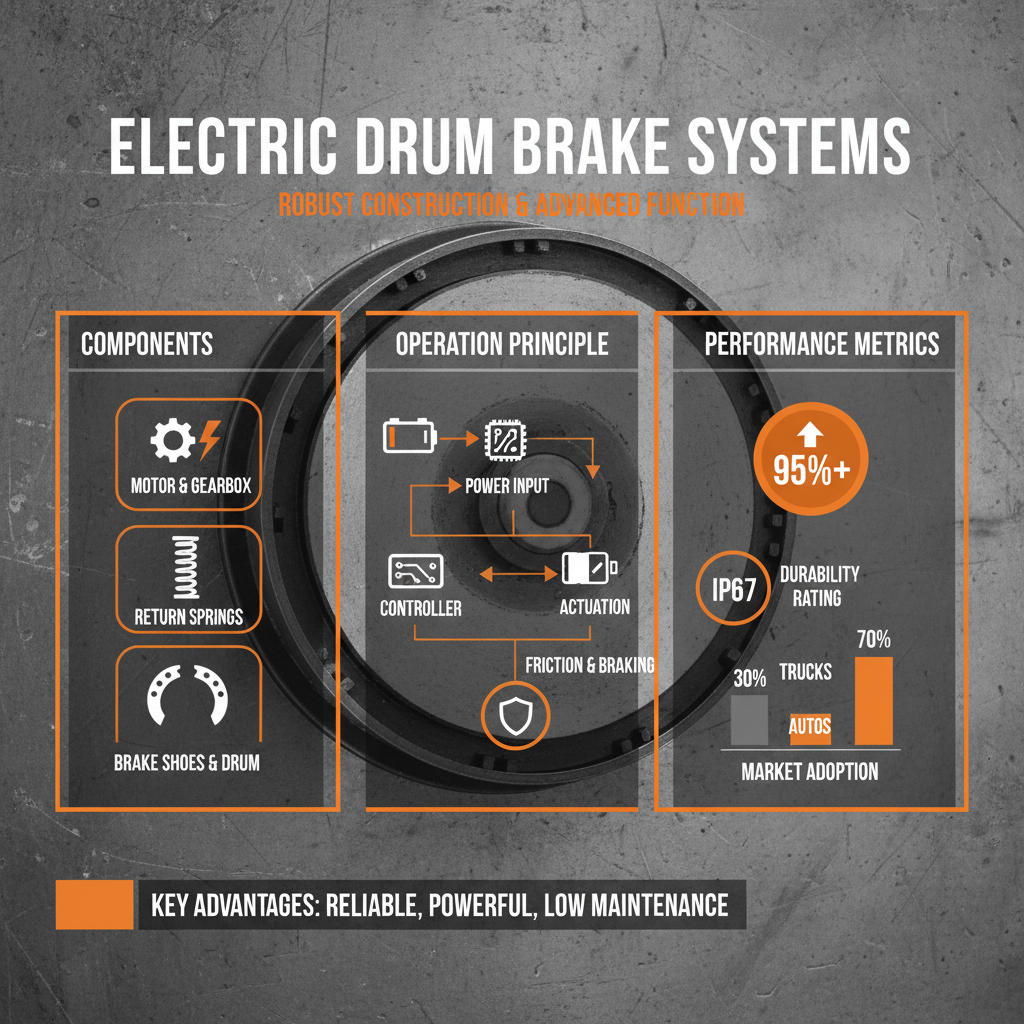
At its core, an electric drum brake utilizes an electric motor to apply the braking force, replacing the traditional mechanical linkage. This system comprises an electric actuator, a gear reduction mechanism, and the standard drum brake components (brake shoes, drum, and springs). The actuator receives signals from the vehicle's control unit, precisely controlling the force applied to the brake shoes.
The key distinction from conventional drum brakes lies in the elimination of hydraulic fluids and cables, reducing maintenance requirements and improving responsiveness. This direct electric actuation enables features like automatic brake force distribution, anti-lock braking systems (ABS), and electronic parking brakes to be implemented more effectively.
The integration of electric drum brakes represents a significant step towards smarter and more efficient braking systems. Their compatibility with electronic control systems positions them as a crucial component in the evolution of modern vehicle technology and industrial machinery.
Key Components & Performance Factors
Several key components contribute to the performance and reliability of electric drum brakes. The electric actuator, often a DC motor or stepper motor, is responsible for generating the braking force. The gear reduction system amplifies the motor's torque, ensuring sufficient force to engage the brake shoes. A sophisticated control unit manages the actuator's operation, regulating braking force and implementing safety features.
Performance is heavily influenced by factors such as actuator response time, gear ratio, and brake shoe material. Faster actuator response translates to shorter stopping distances, while an optimized gear ratio ensures efficient force transmission. High-friction brake shoe materials contribute to increased braking power and improved heat dissipation.
Electric Drum Brake Performance Comparison
Real-World Applications & Use Cases
Electric drum brakes are finding diverse applications across various industries. In the automotive sector, they are increasingly utilized in electric vehicles (EVs) and hybrid electric vehicles (HEVs) to optimize energy efficiency and enhance regenerative braking capabilities. Industrial robots and automated machinery rely on electric drum brakes for precise positioning and safe operation.
Within the aerospace industry, electric drum brakes contribute to improved aircraft braking performance and reduced maintenance costs. Furthermore, they are being implemented in specialized vehicles such as mining trucks and construction equipment where robust and reliable braking is essential.
Advantages & Long-Term Value Proposition
The advantages of electric drum brakes extend beyond simply improved performance. They offer significant cost savings through reduced maintenance needs, eliminating fluid replacement and minimizing wear on components. Their enhanced energy efficiency contributes to lower operating costs and a reduced carbon footprint.
Moreover, the integration of electric drum brakes enhances safety features such as ABS and electronic parking brakes, providing greater control and peace of mind. This translates to increased reliability, reduced downtime, and a stronger return on investment for businesses and consumers alike.
Future Trends & Technological Advancements
Future development of electric drum brakes will focus on further miniaturization, weight reduction, and improved control algorithms. Research into advanced materials, such as carbon fiber composites, aims to enhance braking performance and durability. The integration of artificial intelligence (AI) and machine learning (ML) will enable predictive maintenance and optimized braking strategies.
The rise of autonomous vehicles is expected to drive further innovation in electric braking systems, demanding even greater precision, reliability, and redundancy. Furthermore, the increasing emphasis on sustainability will promote the development of eco-friendly braking materials and manufacturing processes.
The convergence of these trends will shape the future of braking technology, positioning electric drum brakes as a key enabler of safer, more efficient, and more sustainable transportation and industrial systems.
FAQS
Electric drum brakes offer several advantages, including faster response times, more precise control, reduced maintenance due to the elimination of hydraulic fluids, and improved compatibility with advanced driver-assistance systems (ADAS). They also contribute to increased energy efficiency and a smaller environmental footprint.
The initial cost of electric drum brakes is generally higher than traditional hydraulic systems. However, the long-term total cost of ownership can be lower due to reduced maintenance requirements, longer component life, and increased efficiency. The cost difference is decreasing as production volumes increase and technology matures.
Yes, electric drum brakes are increasingly being used in heavy-duty applications. Advances in actuator technology and brake materials have enabled them to deliver the necessary braking force and durability for these demanding environments. They offer improved control and safety compared to traditional systems in these vehicles.
Electric drum brakes require significantly less maintenance than hydraulic systems. The elimination of hydraulic fluids removes the need for regular fluid checks and replacements. Inspection primarily focuses on the electric actuator, wiring, and brake shoe wear. Predictive maintenance capabilities, enabled by integrated sensors, can further reduce downtime.
Electric drum brakes seamlessly integrate with regenerative braking systems. The electric actuator allows for precise blending of regenerative and friction braking, maximizing energy recovery and optimizing braking performance. This integration enhances efficiency and extends the range of electric vehicles.
Electric drum brakes are commonly equipped with advanced safety features such as anti-lock braking systems (ABS), electronic brakeforce distribution (EBD), and electronic parking brakes (EPB). These systems enhance vehicle stability, reduce stopping distances, and improve overall safety for both drivers and passengers. Redundancy features are often incorporated for increased reliability.
Conclusion
Electric drum brakes represent a transformative advancement in braking technology, offering a compelling combination of enhanced performance, increased safety, and reduced environmental impact. From automotive and industrial applications to aerospace and specialized vehicles, their versatility and reliability are driving widespread adoption. Their integration with advanced control systems and regenerative braking technologies positions them as a cornerstone of modern transportation and automation.
Looking ahead, continued innovation in materials, control algorithms, and AI integration will unlock even greater potential for electric drum brakes. By embracing this technology, businesses and individuals can contribute to a safer, more efficient, and more sustainable future. To learn more about our cutting-edge electric drum brakes and their applications, visit our website today.