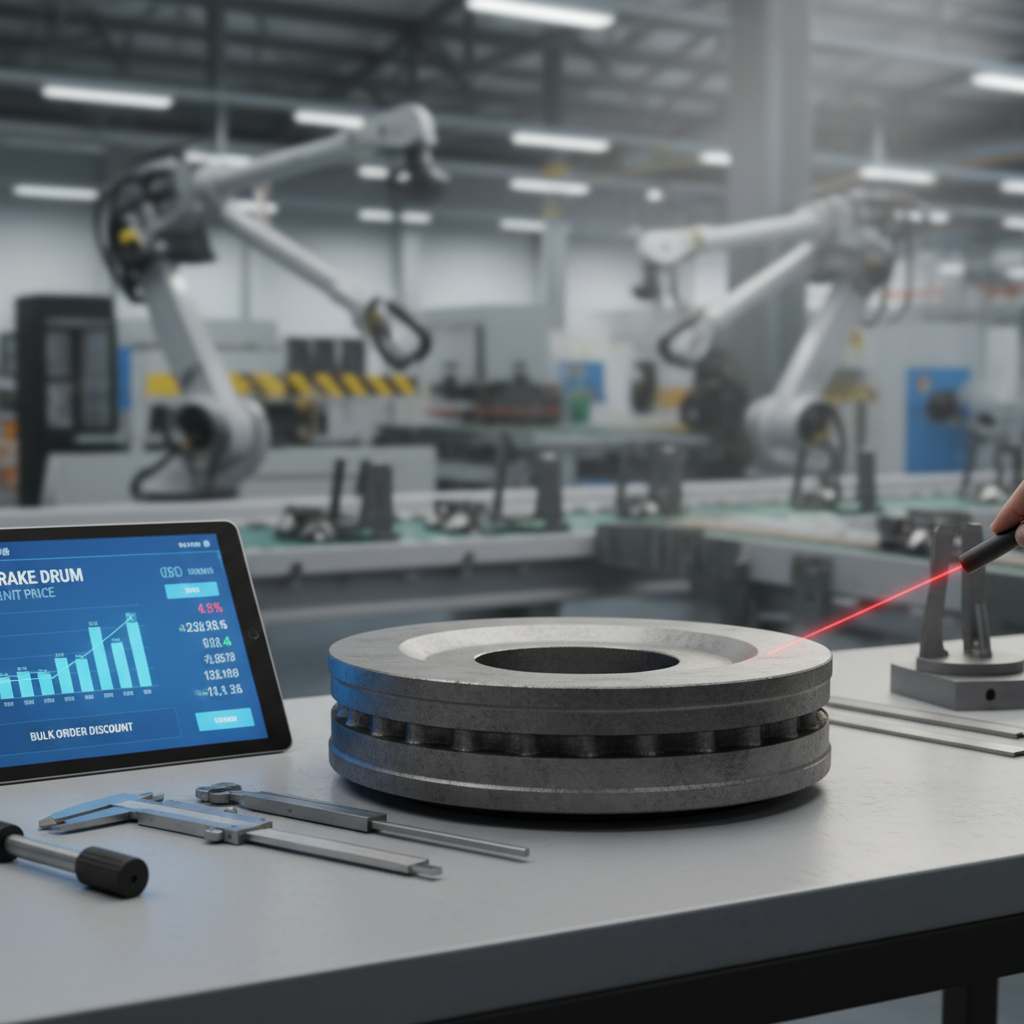
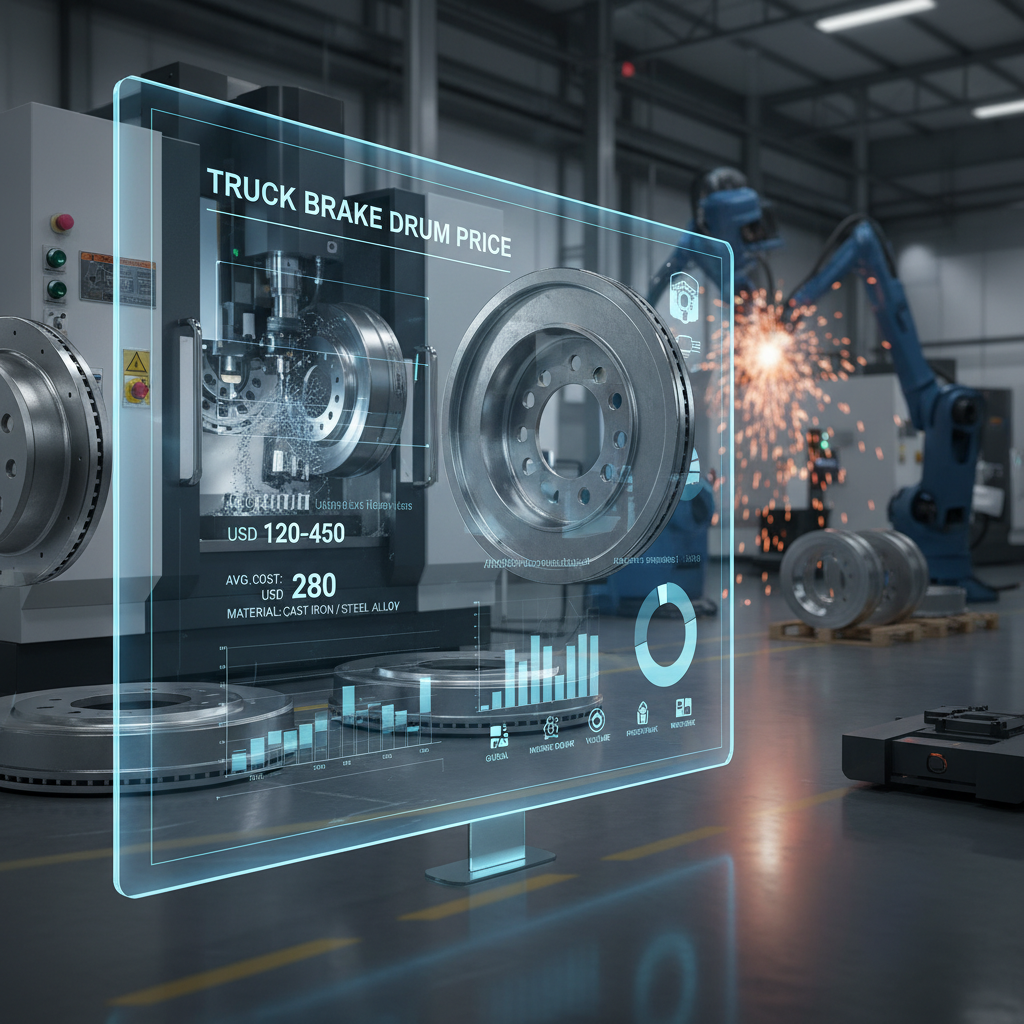
Navigating the complexities of heavy-duty vehicle maintenance often leads fleet managers and owner-operators to a critical crossroad: balancing quality and truck brake drum price. In the automotive parts industry, the brake drum is not merely a consumable component but a primary safety barrier that manages kinetic energy and ensures stopping power under extreme loads. Understanding the pricing dynamics allows businesses to optimize their operational budgets without compromising the safety of their drivers or the integrity of their cargo.
Globally, the logistics sector is facing unprecedented pressure to reduce "down-time" while adhering to stricter safety regulations. The volatility of raw material costs, particularly cast iron and alloy steel, directly impacts the market value of braking components. When analyzing the truck brake drum price, it is essential to look beyond the initial invoice and consider the Total Cost of Ownership (TCO), where durability and heat dissipation capabilities play a pivotal role in reducing the frequency of replacements.
By mastering the variables that influence the cost of these components, procurement officers can make informed decisions that align with both financial constraints and rigorous engineering standards. Whether you are managing a small local delivery fleet or a transnational logistics network, understanding the interplay between material grade, manufacturing precision, and the current truck brake drum price is the key to maintaining a sustainable and safe transport infrastructure.
Global Market Dynamics of Truck Brake Drum Price
The global fluctuation of the truck brake drum price is closely tied to the industrial output of key metallurgy hubs. According to recent trade data, the cost of gray cast iron—the primary material for most drums—is subject to swings in energy prices and environmental regulations in manufacturing zones. As ISO standards for braking efficiency become more stringent, manufacturers are forced to invest in higher-grade alloys, which naturally elevates the base cost but ensures a longer service life.
Furthermore, the shift toward "just-in-time" inventory management has altered how pricing is structured. Large-scale fleet operators now prefer long-term contracts to hedge against the sudden spikes in the truck brake drum price, ensuring that maintenance schedules are not disrupted by market volatility. This strategic approach allows for a predictable cost structure while maintaining a steady supply of critical safety components.
Defining Value in Brake Drum Procurement
When we discuss the truck brake drum price, we are not just talking about a number on a quote, but a reflection of the component's metallurgical integrity and precision engineering. In simple terms, the price represents the cost of casting, machining, and quality testing required to ensure that a heavy-duty vehicle can stop safely under maximum load. A "cheap" drum may save money upfront but often lacks the thermal stability needed to prevent brake fade during long descents.
From an industry perspective, the connection between price and performance is linear: higher-priced drums typically feature better heat dissipation designs and superior wear resistance. For humanitarian logistics or emergency response fleets operating in rugged terrains, investing in a premium truck brake drum price is a necessity rather than a luxury, as the cost of a single brake failure far outweighs the initial investment in high-end parts.
Ultimately, defining value means calculating the cost per kilometer. A drum that is 20% more expensive but lasts 50% longer provides a significantly lower effective truck brake drum price over the vehicle's lifecycle. This shift in mindset—from procurement cost to operational value—is what separates professional fleet management from basic maintenance.
Core Factors Influencing Production Costs
One of the primary drivers of the truck brake drum price is the material composition. The use of high-carbon cast iron or specialized alloys increases the drum's ability to withstand thermal shock, which is critical for preventing cracks. The purity of the melt and the precision of the casting process directly correlate to the final market price, as fewer impurities result in a more uniform wear pattern.
Precision machining and surface finishing also play a significant role. To ensure a perfect fit with the brake shoes, drums must be machined to micron-level tolerances. This requirement for high-end CNC equipment and rigorous quality control checks adds to the overall truck brake drum price, but it is the only way to guarantee that the braking force is distributed evenly across the surface.
Lastly, scalability and order volume influence the unit cost. Manufacturers can offer a more competitive truck brake drum price when producing in large batches due to the amortization of setup costs. However, customized drums for specialized heavy machinery often carry a premium price due to the unique tooling and smaller production runs required.
Comparative Analysis of Pricing Tiers
In the current market, we see a clear stratification of the truck brake drum price based on the target application. Economy-tier drums are designed for light-duty urban delivery, where thermal stress is minimal. Mid-range options balance cost and durability for regional haulage, while premium-tier drums are engineered for extreme-duty mining or long-haul interstate transport.
The difference in price is usually justified by the "Heat Capacity" and "Wear Rate." Premium drums often incorporate advanced cooling fins or proprietary alloy blends that allow them to operate at higher temperatures without warping, which justifies a higher truck brake drum price for heavy-duty users.
Analysis of Truck Brake Drum Price by Product Grade
Global Application Scenarios and Logistics
Across different global regions, the sensitivity to the truck brake drum price varies. In North America and Europe, where highway speeds are higher and safety audits are frequent, there is a stronger preference for high-spec drums that offer maximum reliability. In these markets, the truck brake drum price is viewed as an insurance premium against the catastrophic costs of road accidents.
Conversely, in developing industrial zones or remote mining areas in Africa and Southeast Asia, the focus often shifts toward availability and ease of installation. While the initial truck brake drum price remains a factor, the ability to source parts that can be refurbished or machined locally adds a different dimension to the value proposition, favoring robust, traditional cast-iron designs.
Long-term Value and Safety ROI
Evaluating the truck brake drum price through the lens of Return on Investment (ROI) reveals that the cheapest option is often the most expensive over time. Frequent replacements lead to increased labor costs, higher vehicle downtime, and an increased risk of unplanned maintenance events. When a fleet invests in a higher-quality drum, they are effectively buying "uptime."
Beyond the financial metrics, there is an emotional and ethical dimension: driver safety. A reliable braking system provides drivers with the confidence and dignity of knowing their equipment will perform when it matters most. The peace of mind that comes from knowing the truck brake drum price paid was for a safety-certified, high-performance part is an intangible but invaluable asset.
Moreover, high-quality drums contribute to sustainability. By extending the replacement cycle, companies reduce the amount of scrap metal entering the waste stream and lower the carbon footprint associated with the manufacturing and shipping of replacement parts. Thus, a slightly higher truck brake drum price today leads to a greener tomorrow.
Future Trends in Braking Material Innovation
The future of the truck brake drum price will be shaped by the transition to smarter materials and greener manufacturing processes. We are seeing the emergence of composite materials and advanced coatings that reduce friction wear and heat buildup. While these innovations may initially push the truck brake drum price upward, the resulting increase in longevity will drastically lower the cost-per-mile for the end-user.
Digital transformation is also playing a role. With the integration of wear-sensors and predictive maintenance software, fleet managers can now determine the exact moment a drum needs replacement. This eliminates the guesswork and prevents the premature replacement of parts, optimizing the effective truck brake drum price by maximizing the utility of every single component.
As automation and electric trucks become more prevalent, braking requirements will shift toward regenerative systems, but the mechanical fail-safe—the brake drum—will remain critical. The industry is moving toward a "circular economy" where old drums are recycled into new ones with minimal loss of quality, potentially stabilizing the truck brake drum price in the long term.
Comparative Analysis of Brake Drum Material Impact on Pricing
| Material Grade |
Price Index (1-10) |
Wear Resistance |
Typical Application |
| Standard Gray Iron |
4 |
Moderate |
Urban Delivery |
| High-Carbon Cast Iron |
6 |
High |
Regional Haulage |
| Alloy Steel Blend |
8 |
Very High |
Heavy Mining |
| Ceramic Coated Iron |
9 |
Extreme |
Mountainous Terrain |
| Composite Matrix |
10 |
Ultimate |
Specialized Heavy Lift |
| Recycled Industrial Iron |
3 |
Low-Mid |
Budget Maintenance |
FAQS
The variation in truck brake drum price is primarily due to the material grade, manufacturing precision, and the intended load capacity. A drum designed for a 5-ton truck uses different alloys and thinner walls than one for a 40-ton semi-trailer. Additionally, OEM (Original Equipment Manufacturer) parts usually carry a higher price due to brand certification and guaranteed fitment, whereas aftermarket options vary based on the quality of the casting process.
While generally true, the key is to look for certifications (like ISO or SAE). A higher price often reflects better heat dissipation and resistance to thermal cracking, which are critical for safety. However, simply paying more isn't enough; you must ensure the specifications of the drum match your specific vehicle load and operating environment to truly achieve a safety benefit.
The optimal replacement interval depends on your mileage and load. However, replacing drums based on thickness measurements rather than a fixed schedule allows you to extract maximum value. When you monitor wear and replace only when necessary, you lower the effective truck brake drum price per mile and avoid the risk of catastrophic failure.
Yes, "turning" or machining a drum can remove surface irregularities and extend its life, reducing your immediate expenditure. However, every time a drum is machined, the walls become thinner, which reduces its heat absorption capacity. If the drum falls below the minimum thickness specified by the manufacturer, it must be replaced regardless of the price to ensure safety.
Because brake drums are extremely heavy, freight costs can make up a significant percentage of the total cost. Sourcing from a supplier with localized distribution hubs or optimizing bulk shipments can significantly lower the landed truck brake drum price compared to buying individual units shipped via air or express courier.
Yes, there is a growing market for remanufactured drums and those made from high-percentage recycled alloys. These options often provide a more competitive truck brake drum price while reducing the environmental impact. As long as they meet safety standards, they are an excellent way to balance budget and sustainability.
Conclusion
In summary, the truck brake drum price is a complex variable influenced by material science, manufacturing precision, and global economic trends. While the initial cost is a critical factor for procurement, the true value lies in the balance between durability, safety, and the total cost of ownership. By investing in high-quality components and implementing a data-driven maintenance strategy, fleet operators can minimize downtime and maximize the safety of their logistics operations.
Looking forward, the industry will likely see a stabilization of prices through circular economy practices and the integration of smart materials. We recommend that fleet managers prioritize certified, high-thermal-capacity drums to ensure long-term reliability and driver safety. To explore the best options and get a competitive quote tailored to your fleet's needs, visit our website: www.hbncbrakedrum.com.