0%

Table of Contents

Trailer brakes and drums are critical safety components in any towing scenario, ensuring the secure and controlled operation of trailers. From light-duty utility trailers to heavy-duty commercial transport, these systems are responsible for bringing the trailer to a safe stop, independent of the towing vehicle. Understanding the principles, maintenance, and advancements in trailer brakes and drums is paramount for anyone involved in transportation, logistics, or recreational towing. This knowledge directly impacts public safety and the efficiency of goods movement globally.

The global demand for reliable trailer braking systems is directly correlated with the growth of the transportation industry and the increasing popularity of recreational vehicles. According to the United Nations Economic Commission for Europe (UNECE), road freight transport accounts for approximately 77% of inland freight transport within Europe. Furthermore, the global trailer market is projected to reach significant growth in the coming years, driven by e-commerce and infrastructure development. This creates a constant need for high-quality, durable, and efficient trailer brakes and drums.

A significant challenge within this industry is ensuring consistent safety standards across diverse geographical regions and trailer types. Variations in regulations, material quality, and manufacturing processes can lead to inconsistent performance and potential safety risks. Improved standardization, advanced materials, and proactive maintenance programs are essential to mitigate these challenges and optimize the safety and reliability of trailer braking systems worldwide.
Understanding Trailer Brakes and Drums for Safe and Efficient Towing

Introduction to trailer brakes and drums

Understanding Trailer Brakes and Drums for Safe and Efficient Towing

Understanding the intricacies of trailer brakes and drums begins with recognizing their fundamental role in transportation safety. These systems aren't merely an accessory; they're a critical component mandated by law in most jurisdictions. The proper functioning of trailer brakes and drums directly correlates to preventing accidents, reducing property damage, and safeguarding lives.

The modern trailer brake system has evolved significantly from its earlier mechanical counterparts. Contemporary systems often incorporate electric, hydraulic, or air braking technologies, each with its own advantages and disadvantages depending on the application and trailer weight. Ensuring the correct system is installed and meticulously maintained is paramount for optimal performance and safety.

Defining Trailer Brake Systems

A trailer brake system is a set of components designed to decelerate or stop a trailer when the towing vehicle applies the brakes. Unlike the brakes on the towing vehicle, trailer brakes are often activated independently, ensuring that the trailer doesn't push or overtake the tow vehicle during braking maneuvers. This is crucial for maintaining stability and control, particularly at higher speeds or with heavier loads.

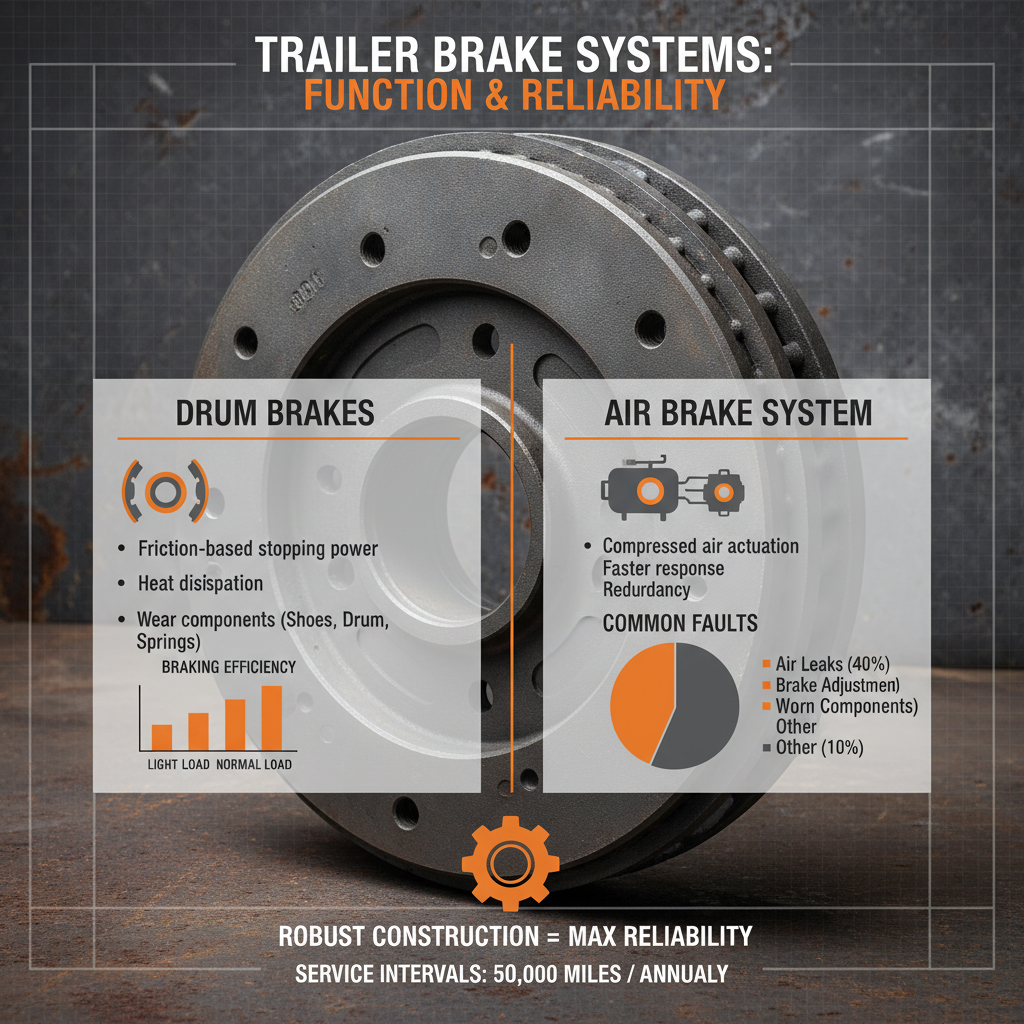
The core of most trailer braking systems involves a braking mechanism—typically drum brakes or disc brakes—mounted on each trailer wheel. When activated, these mechanisms apply friction to the wheel, slowing its rotation. This friction is generated through brake shoes pressing against a drum (in drum brake systems) or brake pads clamping onto a rotor (in disc brake systems).

These systems are not only crucial for the transportation of goods and materials but also play a vital role in recreational activities, such as camping and boating. The reliable operation of trailer brakes and drums ensures safe travel for individuals and their families, supporting leisure and tourism industries.

Core Components of Effective Braking

The effectiveness of any trailer braking system relies on several key components working in harmony. The brake drums or rotors are the primary friction surfaces, while the brake shoes or pads provide the opposing force. The wheel cylinders or calipers apply the pressure to engage these components. The brake lines transmit hydraulic pressure, and the electrical wiring facilitates communication in electric brake systems.

Beyond the core mechanics, the control system is equally crucial. This includes the brake controller in the towing vehicle, which allows the driver to adjust the braking force applied to the trailer. A properly calibrated brake controller ensures that the trailer brakes are synchronized with the tow vehicle's brakes, promoting stable and controlled stopping.

Regular inspection and maintenance of these components are essential. Wear and tear on brake pads, drums, or lines can significantly reduce braking efficiency. Proactive replacement of worn parts and thorough system checks are vital to maintaining optimal safety.

Performance Metrics & Durability

Assessing the performance of trailer brakes and drums involves several key metrics. Stopping distance is a primary indicator of braking effectiveness, as is the ability to maintain stability during emergency braking maneuvers. Fade resistance – the ability to maintain consistent braking force over repeated use – is also a critical factor.

Durability is paramount, especially for commercial applications. Factors like material composition, manufacturing quality, and environmental conditions all impact the lifespan of brake components. Regular inspection for wear, corrosion, and damage is vital to ensure long-term reliability.

Trailer Brake System Comparison


Global Applications and Industry Integration

Trailer brakes and drums find applications across a diverse range of industries globally. In the logistics sector, they are indispensable for the safe transportation of goods via trucks and trailers. Agricultural industries rely on them for moving farm equipment and harvested crops. The construction industry utilizes them for hauling materials and machinery to job sites.

The recreational vehicle (RV) market represents another significant application. Ensuring the safe stopping of RVs and their towed trailers is paramount for the safety of travelers. Moreover, emergency response vehicles, such as fire trucks and ambulances, frequently rely on robust trailer braking systems to transport specialized equipment.

Long-Term Benefits and Value Proposition

Investing in high-quality trailer brakes and drums delivers significant long-term benefits. Reduced maintenance costs, increased safety, and extended component lifespan all contribute to a lower total cost of ownership. Moreover, reliable braking systems minimize the risk of accidents, protecting both people and property.

From a sustainability perspective, durable brake components reduce waste and the environmental impact associated with frequent replacements. Enhanced safety also contributes to societal well-being, fostering trust in the transportation system and ensuring the efficient movement of goods and people.

The peace of mind that comes with knowing your trailer is equipped with a dependable braking system is an invaluable benefit. It provides confidence on the road, minimizing stress and maximizing the enjoyment of towing activities.

Future Trends in Trailer Brake Technology

The future of trailer brake technology is focused on enhanced safety, automation, and integration with advanced driver-assistance systems (ADAS). Electronic Stability Control (ESC) systems for trailers are becoming increasingly common, utilizing sensors and algorithms to automatically apply brakes to prevent rollovers and maintain directional control.

The development of smart braking systems that can communicate with the towing vehicle and other trailers is another emerging trend. These systems can dynamically adjust braking force based on load, road conditions, and traffic patterns, optimizing safety and efficiency.

Materials science is also playing a role, with research focused on developing lighter, more durable, and corrosion-resistant brake components. These advancements will contribute to improved performance, reduced maintenance, and a longer service life for trailer braking systems.

Summary of Challenges and Potential Solutions for Trailer Brake Systems

Challenge Impact on Performance Potential Solution Implementation Cost (1-10)
Corrosion of Brake Drums Reduced Braking Efficiency Coating with Corrosion-Resistant Materials 6
Uneven Wear of Brake Pads Reduced Stopping Power Improved Pad Material Composition 7
Inadequate Brake Controller Calibration Trailer Instability Automated Calibration Systems 5
Hydraulic Line Leaks Complete Brake Failure Use of High-Strength, Leak-Proof Hoses 4
Lack of Regular Inspection Unforeseen Brake Failures Mandatory Inspection Schedules 3
Incompatibility of Components Reduced System Efficiency Standardized Component Design 8

FAQS

How often should I inspect my trailer brakes and drums?

Regular inspection is crucial for maintaining the safety and reliability of your trailer braking system. As a general guideline, you should inspect your brakes at least every 6,000 miles, or annually, whichever comes first. More frequent inspections are recommended for heavy-duty use or when towing in challenging conditions. Check for wear on brake pads and drums, leaks in the hydraulic lines, and proper functionality of the brake controller. Neglecting inspections can lead to decreased braking performance and potential safety hazards.

What is the difference between drum brakes and disc brakes for trailers?

Drum brakes are a more traditional and generally less expensive option, relying on brake shoes pressing against the inside of a rotating drum. Disc brakes, on the other hand, utilize brake pads clamping onto a rotor. Disc brakes generally offer superior stopping power, better heat dissipation, and are less prone to fading. However, they are typically more expensive to install and maintain. The best choice depends on your specific towing needs, budget, and the weight of your trailer.

What is a brake controller and how does it work?

A brake controller is a device installed in the towing vehicle that regulates the amount of braking force applied to the trailer brakes. It receives signals from the tow vehicle’s brake pedal and translates them into electrical or hydraulic signals that activate the trailer brakes. Modern brake controllers offer adjustable settings to customize the braking force based on the trailer's weight and load. Proper adjustment and calibration are essential for ensuring synchronized and effective braking.

How do I know if my trailer brakes are out of adjustment?

Several indicators can signal that your trailer brakes are out of adjustment. These include a lower brake pedal feel, excessive travel before the brakes engage, and uneven braking force. If the trailer feels like it’s pushing the tow vehicle during braking, or if you notice unusual noises, it's a strong indication that the brakes need adjustment. Regularly checking and adjusting the brakes ensures optimal performance and prevents premature wear.

Can I replace trailer brake components myself?

While some basic brake maintenance tasks, like inspecting brake pads and lines, can be performed by experienced DIYers, replacing major components like drums, rotors, or calipers is best left to qualified professionals. Improper installation can compromise the safety and effectiveness of the braking system. A professional mechanic has the expertise, tools, and knowledge to ensure the job is done correctly and safely.

What maintenance is required for electric trailer brakes?

Electric trailer brakes require periodic maintenance to ensure reliable operation. This includes inspecting the wiring connections for corrosion and damage, cleaning the brake shoes and drums to remove debris and contaminants, and adjusting the brake shoes to maintain proper clearance. Applying a thin coat of electrical contact cleaner to the backing plates and magnets can also help prevent corrosion and improve performance. Routine maintenance extends the lifespan of your electric trailer brakes and ensures consistent stopping power.

Conclusion

In conclusion, understanding trailer brakes and drums is not merely a technical exercise, but a critical component of ensuring road safety and operational efficiency. From the foundational principles of braking mechanics to the emerging trends in automation and materials science, continuous learning and proactive maintenance are essential for maximizing the longevity and performance of these vital systems. Proper selection, installation, and regular upkeep directly contribute to preventing accidents, reducing costs, and protecting lives.

Looking ahead, embracing advancements in technology and prioritizing preventative maintenance will be key to navigating the evolving landscape of trailer transportation. We encourage you to explore our range of high-quality trailer brakes and drums and consult with our experts to find the optimal solutions for your specific needs. Visit our website today to learn more and ensure your trailer is equipped for safe and reliable performance.

David Chen

David Chen

David Chen is the Production Manager at Hebei Ningchai Machinery Co., Ltd., responsible for overseeing the daily operations of our state-of-the-art production facility. David’s expertise lies in optimizing manufacturing processes and maximizing efficiency. He manages a team of skilled technicians operating our electric smelting furnaces, CNC lathes, and automated paint
Previous Essential Guide to Truck Brake Drums Performance Maintenance and Future Trends
Next Comprehensive Guide to Brake Drum Turning for Vehicle Maintenance and Safety